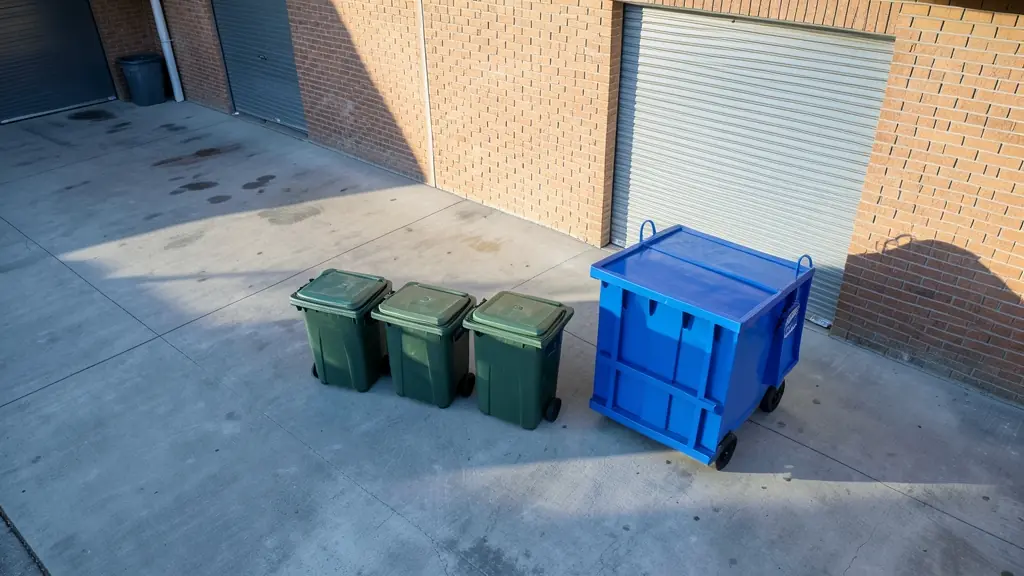
People search "what is waste removal" because the phrase covers so much. In plain words it is someone collecting what you throw away, on a schedule or once off, and taking it to a place licensed to receive it. For a house the council usually handles the wheelie bin. For a shop, a restaurant, a school or a factory it often means a private contract: bins or skips on site, collected on set days, with records of where it went. This page is about that regular service, and how to set it up well.
What the council service does, and where it stops
The municipal service, whether Pikitup in Johannesburg, the City of Cape Town or eThekwini, empties household bins on a weekly round. It is built for ordinary household rubbish, so it usually does not take builders' rubble, big garden loads, furniture, chemicals or a business's volume of waste.
Many businesses also find the council round too infrequent or the bins too small. That is where private waste removal comes in, and where junk removal and garden refuse removal cover the once-off loads. Ask the municipality what it collects at your address before you contract anyone.
Waste classes in plain words
- General waste: packaging, food waste, office rubbish; the bulk of a business's bins.
- Recyclables: cardboard, paper, glass, cans and some plastics, cheaper to remove when kept apart.
- Inert waste: builders' rubble, soil and stone; see rubble removal.
- Garden waste: green material, often composted.
- Hazardous waste: oils, solvents, chemicals, tubes, batteries and medical waste, which need a licensed handler and a paper trail.
Setting up a contract collection
- Look at a normal week: how many bins or bags, and which kinds of waste.
- Decide the container: wheelie bins, a larger lidded bin or a skip for bulky waste.
- Agree the days and times, and where the bin stands so the truck can reach it.
- Ask what may not go in, and what an extra collection costs.
- Get it in writing, with the notice period and how often the bins are washed or swapped.
Records: why the paper matters
Under the Waste Act whoever produces waste stays responsible for it until it reaches a licensed site. If your bins end up on an open plot, the trail can lead back to you, not only to the collector.
So ask for disposal slips or a monthly statement showing where the waste went, and keep them with your invoices. Landlords, franchisors and auditors increasingly ask for that record, and for hazardous waste a business must keep it. A business with several branches can ask for one statement per site, so each manager checks their own.
What to put in your request
- The kind of waste: general, recyclables, food
- How many bins or bags fill in a week
- How often you need it collected
- Where the bins stand and how a truck gets in
- Whether you need monthly disposal records
Waste Removal for homes, builders, sites, complexes and farms
- Homeowners: the overflow the council round leaves behind, or a once-off clean-up after a big event
- Builders and renovators: a bin for packaging and site rubbish kept apart from the rubble skip
- Developers and main contractors: general waste, recycling and rubble collected on a schedule across a big site
- Complexes, estates and landlords: communal bin areas, recycling stations and collection days agreed with the body corporate
- Shops, offices and schools: a restaurant, shop or office with more bins than the council round empties
- Factories, warehouses and mines: general and recyclable waste from a factory, with records kept for audits
- Municipalities, churches and NGOs: schools, clinics and halls that need bins emptied and a record for the department
- Farms and smallholdings: general waste from the farmhouse, workers' houses and packing shed, collected on contract