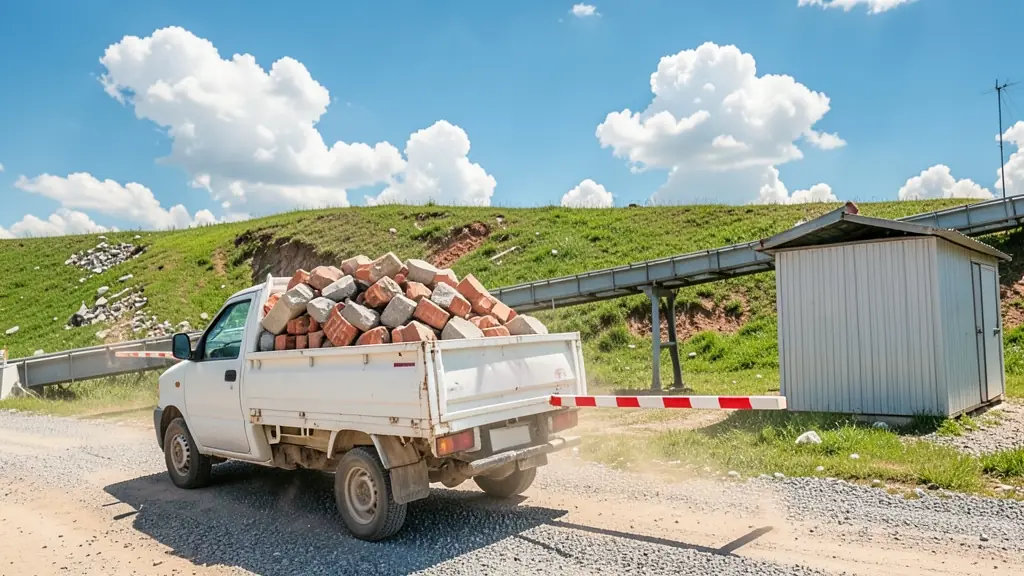
You have a bakkie full of rubble and you type "dumping site near me". The results mix landfills, drop-offs, garden sites, crusher yards and photos of an open plot where people tip illegally. They do not all take the same waste, or take it from the same people. This page explains the kinds of legal dumping site in South Africa, what each usually accepts, how the weighbridge and tariffs work in general, what to bring, and when it costs less to let someone else take the load. It names no sites: lists and rules change, so check with the municipality.
Landfill, drop-off, garden site or crusher yard
- Municipal landfill: the big licensed site. It usually takes builders' rubble, general waste and garden refuse from residents and businesses, charged at a weighbridge or per load at the municipality's published tariff.
- Drop-off or garden site: a smaller site in the suburbs, mostly for residents in cars, bakkies and small trailers. Many take garden refuse, recyclables and small loads of rubble, often free or for a small fee, with limits on the vehicle and the load.
- Private landfill: licensed and run by a company, usually for trucks and businesses.
- Crusher yard: takes clean concrete and brick rubble for crushing; see rubble recycling.
Finding a free municipal dumping site near you
Start with your metro or municipality's website or call centre, and look for its list of drop-offs and landfill sites. Pikitup, the City of Cape Town, the City of Tshwane and eThekwini all publish where residents may take waste. Check what each site takes, whether builders' rubble is limited, which vehicles are allowed, and whether you need proof of address.
Phone before a long drive. Sites close for maintenance, some limit rubble at drop-offs, and a truck or a business may be sent to the landfill instead.
At the gate: the weighbridge and what to bring
- Sort the load: rubble, garden refuse and general waste kept apart, nothing hazardous.
- Bring your ID and proof of address if the site asks for it.
- Cross the weighbridge loaded, tip where you are told, cross again empty.
- Pay the difference in weight at the tariff, or the flat fee, and keep the slip.
Estimate the fee first with the landfill fee calculator.
Why the open plot is the expensive option
Dumping anywhere but a licensed site is illegal, and the person who made the waste stays responsible for it. Municipal by-laws carry fines, and dumped rubble can be traced back to an address. If you pay someone to take a load, ask where it is going and for the disposal slip. A quote far below the rest may be a dumper.
What to put in your request
- What the load is: rubble, garden, mixed or junk
- Roughly how many cubes or bakkie loads
- Whether it is sorted or mixed
- Where it is now and how it can be loaded
- That you want the disposal slip
Dumping Sites for homes, builders, sites, complexes and farms
- Homeowners: a bakkie of rubble or garden refuse from a weekend project taken to a drop-off
- Builders and renovators: rubble from small jobs tipped at the landfill, with slips kept for the client
- Developers and main contractors: bulk loads sent to a licensed or private landfill, with weighbridge records for the file
- Complexes, estates and landlords: garden refuse and rubble from the complex taken to the right site by the contractor
- Shops, offices and schools: shop fit-out waste taken to the landfill, since drop-offs often serve residents only
- Factories, warehouses and mines: general waste to a landfill and hazardous waste to a licensed site with paperwork
- Municipalities, churches and NGOs: clean-up bags and dumped rubble from an open plot taken to the municipal landfill
- Farms and smallholdings: old building rubble and farm waste carted to the nearest licensed site, not a farm dump