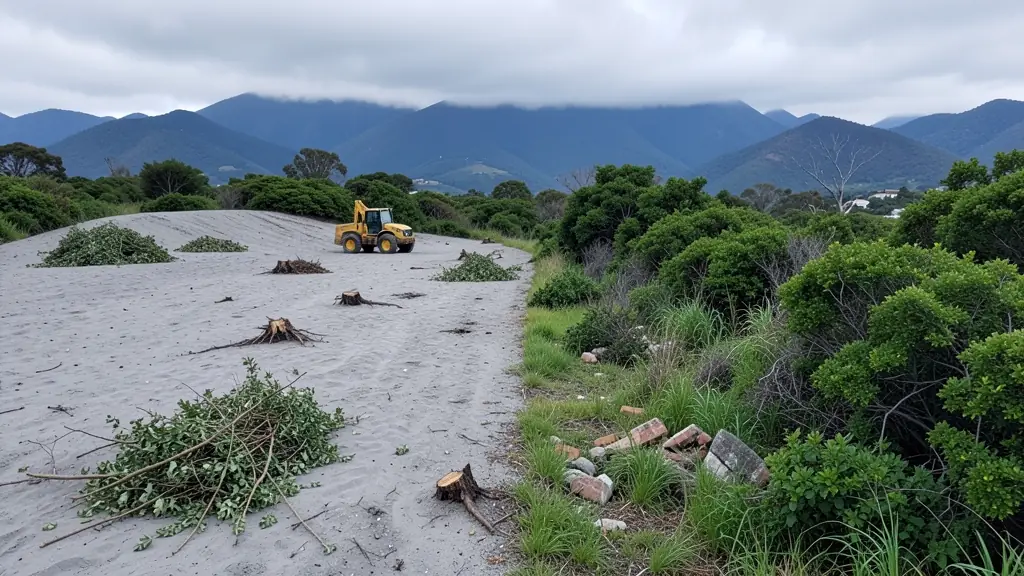
The estate agent says the stand will sell better cleared. The architect needs a surveyor on it, and the surveyor cannot see the pegs through the wattle. Under the long grass there are two bakkie loads of somebody else's rubble. Site clearing is the work that turns a plot like that into bare, levelled ground a buyer can walk or a builder can peg. It mixes three trades: cutting vegetation, removing stumps and waste, and moving soil. Here is how the job runs, what tends to be hidden, and what the quote should cover.
What comes off a typical stand
- Vegetation: grass, bush, trees and often invasive alien plants such as wattle, which a landowner may be required to control.
- Stumps and roots: pulled with a TLB or an excavator, or ground out where machines cannot reach.
- Old dumping: rubble, tyres, garden refuse and household waste left on an empty plot.
- Topsoil: often stripped and stockpiled for later gardens, or carted.
Each goes to a different place, so sorting on site keeps costs down. The garden refuse calculator estimates the green loads.
The clearing sequence, step by step
- Walk the stand with the contractor and mark trees to keep and the boundary pegs.
- Cut and chip or stack the vegetation.
- Pull the stumps and fill the holes.
- Pick out the dumped rubble and waste, and look for asbestos sheeting; a registered asbestos contractor must handle that.
- Strip the topsoil if the plans call for it, then level.
- Cart everything to the right site and keep the slips.
Problems that change the quote, and why
- The price rose after the grass was cut: the hidden dumping only showed once the bush was down. Ask for a rate per extra load.
- The machine bogged: wet clay or a spring. Clearing in the dry season, or with a tracked excavator, avoids it.
- A neighbour complained about smoke: burning cut bush is restricted in many areas. Check the by-law with the council and the fire rules first.
- Protected trees on the stand: some species may not be cut without a permit; ask the municipality.
Land clearing on farms and big plots
On a smallholding or farm the job is bigger and greener: bush encroachment, alien stands along a stream, old kraals and sheds. Clearing a large area of indigenous vegetation may need environmental authorisation, so ask the provincial environment department before you start. Plan the work for the dry months where the ground allows, keep a strip along any stream until you have asked, and agree whether cut wood stays for the farm or is carted. For the old buildings, see demolition contractors.
What to put in your request
- The stand size in m² and how steep it is
- What is on it: grass, bush, trees, dumped rubble
- Trees or features you want kept
- Whether topsoil must be stripped and kept
- Photos from each corner of the stand
Site Clearing for homes, builders, sites, complexes and farms
- Homeowners: an overgrown stand cleared before plans are drawn, or a back plot cleaned up to sell
- Builders and renovators: a stand stripped and levelled so the surveyor can peg it and the foundations can start
- Developers and main contractors: bulk clearing of a township or estate site, topsoil stockpiled for later landscaping
- Complexes, estates and landlords: clearing an unused common area or an empty stand in the estate before it is sold
- Shops, offices and schools: an empty lot cleared for parking or for a new branch on the main road
- Factories, warehouses and mines: vacant land beside the factory cleared of bush, old drums and rubble before expansion
- Municipalities, churches and NGOs: an open plot used for illegal dumping cleared during a ward or church clean-up
- Farms and smallholdings: bush encroachment and alien stands cleared from camps, streams and old building sites