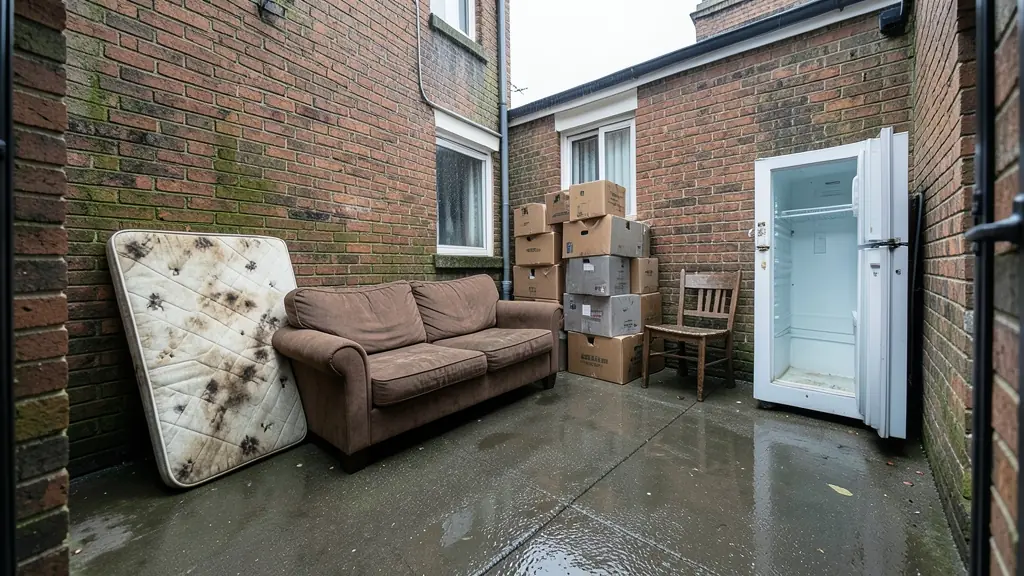
The tenant left in March and took nothing: a couch, two beds, a fridge that no longer cools, a wardrobe of clothes and a balcony of boxes. Most junk removal looks like that, the contents of a room, a garage or a whole flat that someone has to deal with in a hurry. The load is light but very bulky, and the hard part is usually getting it down the stairs. A good junk removal service sends a team that carries, loads and sorts, and tells you where each kind of item will go.
Four piles before anyone carries anything
- Keep: papers, photos, keys and anything the family or the owner wants. Take it out of the rooms first.
- Sell or donate: sound furniture, working appliances, clothes and kitchenware; churches, shelters and charity shops often collect.
- Recycle: metal, cardboard, e-waste and old fridges, which need the right recycler.
- Dispose of: broken furniture, stained mattresses and general rubbish, carted to a licensed site.
The smaller the last pile, the smaller the load you pay for.
The awkward items and why they cost more
- Fridges and freezers: the gas in the cooling system should be removed properly, so they belong with a recycler, not in a skip.
- TVs, computers and batteries: e-waste goes to an e-waste recycler; batteries are hazardous waste.
- Mattresses and couches: light, but one couch can fill a fifth of a bakkie.
- Paint tins and pool chemicals in the garage: leave them out of the junk load and ask separately.
Stairs, lifts and the body corporate
A third floor walk-up in a block without a lift doubles the carrying, and teams price that in. Tell them the floor, whether there is a lift, how far the truck can park from the entrance and whether the stairwell is narrow. A wardrobe that came in flat packed may have to go out in pieces. Ask whether the team brings blankets and a trolley, and who pays if a wall or a door frame gets scraped on the way down.
In a complex, ask the body corporate or the managing agent when moving is allowed, where a truck may stand and whether the lift needs protecting. A mini skip is an option only if the complex allows one.
Clearing a deceased estate or a tenant's leftovers
- Get written permission from the executor, the owner or the landlord before anything leaves.
- Photograph every room as it is, for the file.
- Take out the keep and sell piles, then invite a charity to collect.
- Book the team for the rest, with a rough count of rooms and big items.
- Ask for the disposal slip and photos of the empty flat when they finish.
What to put in your request
- The main items: beds, couches, appliances
- How many rooms or a rough truck load
- The floor, stairs and whether there is a lift
- Where the truck can park near the entrance
- Any fridges, e-waste or chemicals in it
Junk Removal for homes, builders, sites, complexes and farms
- Homeowners: a garage full of broken furniture, old mattresses and the boxes from the last move
- Builders and renovators: the old cupboards, beds and carpets left in a house before the renovation starts
- Developers and main contractors: furniture and fittings left behind in buildings bought for redevelopment, cleared before demolition
- Complexes, estates and landlords: a flat a tenant left full of furniture, cleared so the unit can be let
- Shops, offices and schools: old desks, chairs and filing cabinets after an office move or a shop closing
- Factories, warehouses and mines: canteen furniture, broken racking and old office equipment cleared from a warehouse
- Municipalities, churches and NGOs: school desks, church hall chairs and clinic cupboards that are past repair
- Farms and smallholdings: old furniture, appliances and rubbish cleared from workers' houses and outbuildings