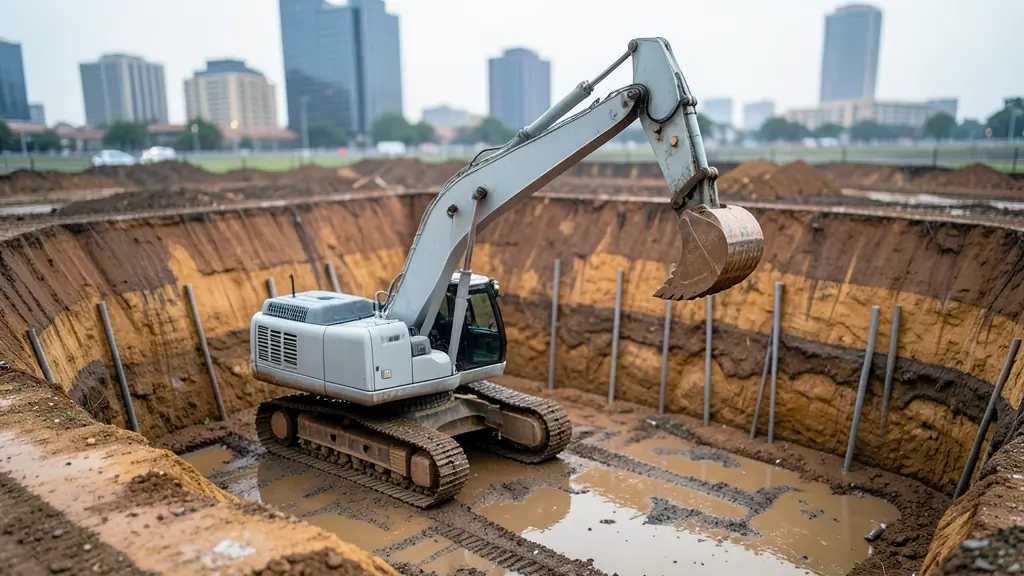
Size is the first decision, and the one most often got wrong. A homeowner orders a large machine for a pool hole and finds it cannot pass the house; a developer books a mini excavator for a basement and is still digging a week later. Excavator hire covers a wide range, from a mini machine that fits through a garden gate to a 20 ton class excavator for bulk earthworks. All of them run on tracks, dig deeper than a TLB and need transport to site. This page helps you choose, then covers the costs and risks of the hire.
Matching the machine to the hole
- Mini excavator: back gardens, pools, drains, small footings and tight access. Slow on bulk work, but it gets where nothing else does.
- Midi class: house foundations, longer service trenches and small demolition jobs.
- 20 ton class: basements, bulk excavation, dams, deep sewer lines and heavy demolition, loading 10 cube tippers and side tippers quickly.
Tell the operator the depth, the length and the soil, and let them suggest the class: a bigger machine costs more an hour but can finish in days what a small one takes weeks to do. Ask what the machine weighs and how wide it is, because both decide whether it fits on your site at all.
Getting it there: the lowbed and the access
Excavators do not drive between sites. A mini may come on a trailer; a 20 ton class machine comes on a lowbed, which needs road space to offload and a route without low wires or tight corners. The transport is quoted separately, often both ways.
Tracks spread the weight and cope with mud after Cape winter rain, but steel tracks chew up paving, kerbs and tar. Ask for rubber tracks or mats where it crosses a hard surface, and photograph the driveway before the machine arrives.
Excavation is only half the job
Every cube out of the ground has to go somewhere, and it bulks up once dug. A basement can mean dozens of truck loads. Work it out with the truck loads calculator and book trucks to match the digging rate, or the machine stands while you pay. For big volumes, see side tipper hire and soil removal.
Breakers, grabs and demolition work
With a hydraulic breaker an excavator cracks thick slabs, footings and old reservoirs; with a grab or a sorting bucket it pulls down walls and picks timber and steel out of the rubble. On a demolition job, check the services are off, asbestos has been dealt with by a registered contractor, and the municipality has been asked about a permit before the machine starts.
What to put in your request
- The depth, length and width of the dig
- The soil: sand, clay, rock or old fill
- Access width and where a lowbed can offload
- Attachments: breaker, grab or ripper
- How many trucks you have to cart the spoil
Excavator Hire for homes, builders, sites, complexes and farms
- Homeowners: a pool hole, a deep drain or a terraced garden dug with a mini machine
- Builders and renovators: foundations on clay, long sewer connections and breaking out an old garage floor
- Developers and main contractors: basements, bulk excavation and platforms for a block of units or a warehouse
- Complexes, estates and landlords: stormwater upgrades and replacing a failed sewer line under the complex roads
- Shops, offices and schools: a new loading bay, an underground tank or demolishing a building behind the shop
- Factories, warehouses and mines: pulling up thick slabs, digging plinths for plant and loading side tippers
- Municipalities, churches and NGOs: trenches for water and sewer, cleaning out canals and clearing large dumping sites
- Farms and smallholdings: a new dam or cleaning an old one, contour banks and breaking old concrete dips