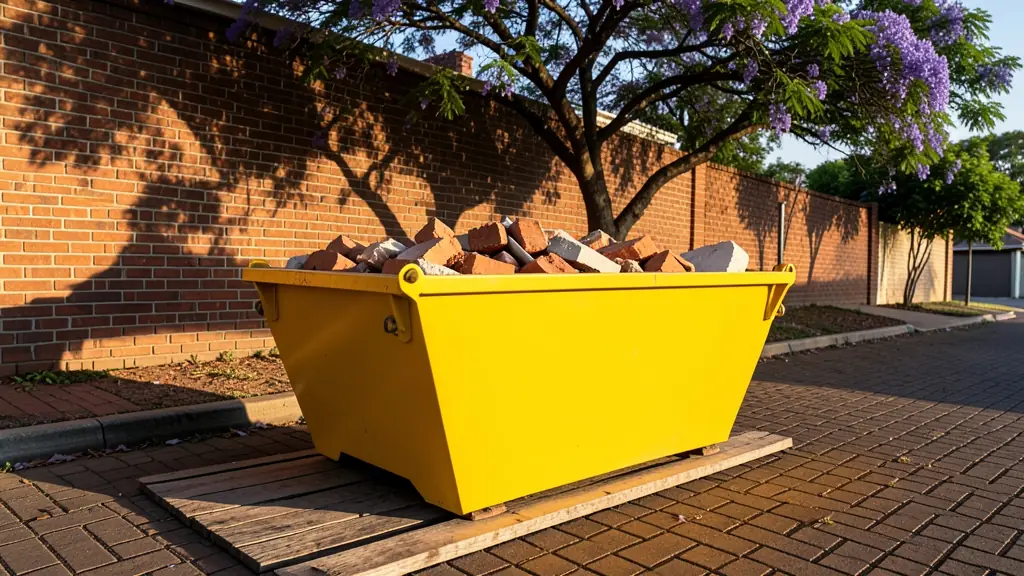
A skip arrives on the back of a loader truck, sits on your property for an agreed number of days, and leaves full. That sounds simple, and mostly it is, but the calls that go wrong share a pattern: the wrong size booked by description, a load of wet soil nobody mentioned, a skip parked where the truck cannot reach it again. This page follows a hire from the moment you phone to the moment the truck lifts the full bin away, with the questions to ask at each step so the collection day holds no surprises.
Three things to settle before you phone
First, the size, in cubic metres. "Small", "medium" and "builder's skip" mean different things to different companies, so ask for the cube. If you are not sure, measure the heap or the area you are stripping and run it through the skip size calculator, which checks both volume and weight.
Second, the material. Say plainly whether it is clean rubble, soil, concrete, garden refuse or a mix, because the operator prices and loads each one differently. Third, the spot: a firm, level place the truck can back up to, with no low wires, carport roof or overhanging branches in the way.
How a hire usually runs
- You book the size, the material and the date, and the company confirms the hire period.
- The truck drops the skip; check that boards are put down if it stands on paving.
- You fill it over the agreed days, keeping the load level with the rim.
- You phone for collection or a swap before the period ends, as extra days are often charged.
- The truck lifts it, and you ask where it is going and for the disposal slip.
If the job is still running, a swap (a full skip out, an empty one in) keeps you working. What each step costs is on skip hire prices.
What most companies will not take in a skip
- Asbestos roof sheets, gutters or pipes: a registered asbestos contractor must deal with them.
- Paint, solvents, oil, batteries and chemical drums: these go to a hazardous waste handler.
- Tyres, gas bottles and fridges, which most landfills refuse or charge for separately.
- Household food waste, which smells and draws flies on a hot week.
Ask the company for its own list; it varies.
Weight, the fill line and a pavement skip
A skip that looks half empty with concrete or wet soil in it can already be too heavy to lift legally. Loading heavy material to the top is the commonest reason for an extra charge, or for a driver tipping part of the load back onto your driveway.
If the skip must stand on the verge or the road, the municipality may need to give permission and the pavement must stay open. Complexes and estates have their own rules, so ask the body corporate before the truck comes.
What to put in your request
- The skip size you want, in cubes
- The material: clean rubble, soil or mixed
- How many days you need it on site
- Where it will stand: driveway, verge or yard
- Whether you may need a swap mid-job
Skip Hire for homes, builders, sites, complexes and farms
- Homeowners: a skip on the driveway while the old patio, boundary wall or bathroom comes out
- Builders and renovators: a skip per stage of a renovation, swapped when full so the crew keeps working
- Developers and main contractors: several skips across a site, booked and swapped on the building programme
- Complexes, estates and landlords: a skip for a unit renovation, placed where the body corporate allows it
- Shops, offices and schools: a skip behind a shop fit-out or an office move, collected after hours if needed
- Factories, warehouses and mines: skips for rubble from plant room work, kept apart from any hazardous waste
- Municipalities, churches and NGOs: a skip at a school or church clean-up day, collected the following morning
- Farms and smallholdings: a skip in the farm yard for an old shed, a kraal wall or a farm dump