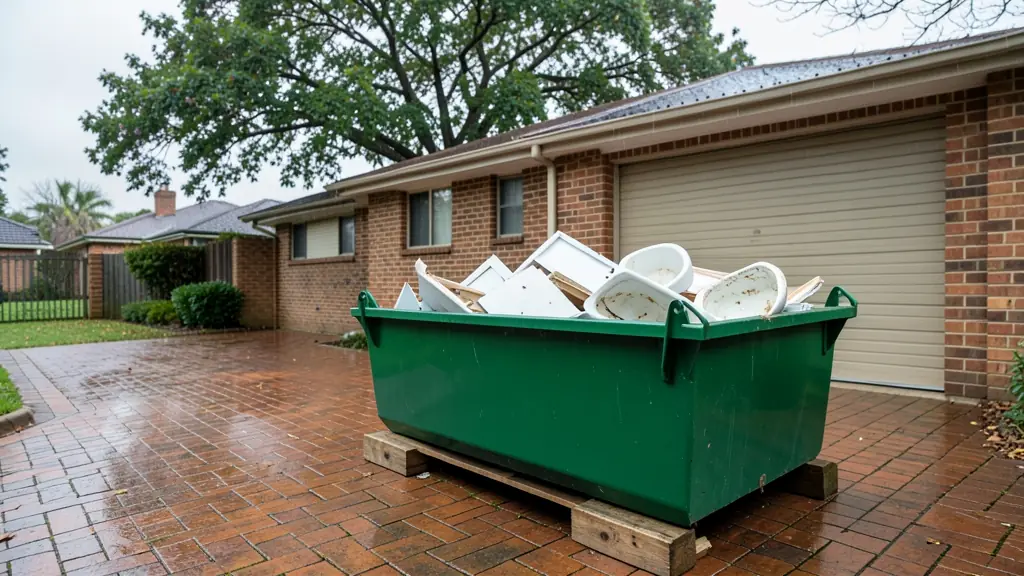
A renovation throws out two kinds of waste at once. The first days of a kitchen or bathroom strip-out fill the driveway with old cupboards, a bath, ceiling boards and packaging, all bulky and light. Then the tiles, screed and plaster come off the walls and floors, and a small heap suddenly weighs more than the skip may carry. Add a family still cooking, sleeping and working in the house, and a body corporate with its own rules, and the removal needs a plan. Here is how to time it, sort it and keep the house usable.
What a strip-out actually leaves behind
List what is coming out before you ask for a quote. It falls into two piles that behave very differently in a skip.
- Bulky and light: kitchen carcasses and doors, built-in cupboards, an old bath, the vanity, ceiling boards and cornices, carpets, underlay, insulation, and the boxes and plastic from the new fittings.
- Small and heavy: wall and floor tiles, the screed under them, plaster hacked off for new plumbing, a brick partition, a concrete shower base.
A skip of the first pile fills up long before it gets heavy; a skip of the second gets heavy long before it looks full. The skip size calculator checks both limits for your mix.
Living in the house while the rubble goes out
Every bag of tiles travels from the bathroom to the street, down the passage and past the lounge. Ask the team to lay boards or old carpet along that route, close the internal doors and tape plastic over the doorway of the room being stripped. Dust is far easier to keep out than to clean out.
Agree where the waste waits. A heap on the lawn kills the grass and invites the neighbours' rubbish; filled bags in the garage keep the driveway clear for your car. If the bathroom is upstairs, rubble bags lifted out by a crane truck can save days of carrying.
Complexes and estates: what trips people up
- The skip is turned away at the gate: many estates limit truck sizes and working hours, so ask the body corporate before you book.
- A fine for waste on the common property: the rules often say where a skip or bags may stand, and for how long.
- The paving cracks: a loaded skip truck is heavy, so ask for boards under the skip and look at the road surface.
- No room for a skip at all: a mini skip, or a truck with a loading team that clears it the same day, may fit where a skip cannot.
Order the removal by phase, not all at once
- Book the first removal for the strip-out week, sized for the bulky pile.
- Keep tiles, screed and plaster in their own bags so they can go as a clean rubble load, which usually costs less to dispose of than mixed waste (see building rubble removal).
- Set aside cupboards, doors and the old geyser for a charity, a buyer or a scrap dealer.
- Book a last small collection for offcuts and packaging when the fitters leave.
What to put in your request
- The rooms being stripped and what comes out
- Tiles and screed kept apart from cupboards
- Upstairs, stairs or a long carry to the street
- Complex or estate rules on trucks and hours
- When the strip-out starts and ends
Renovation Waste Removal for homes, builders, sites, complexes and farms
- Homeowners: a kitchen or bathroom stripped out while the family keeps living in the house
- Builders and renovators: back to back bathroom jobs where tiles, screed and old suites leave every week
- Developers and main contractors: refurbishing a block of flats, with strip-out waste coming from many units at once
- Complexes, estates and landlords: unit renovations that must follow the body corporate's rules on skips and hours
- Shops, offices and schools: an office or restaurant refit, with old partitions, ceilings and counters stripped out
- Factories, warehouses and mines: stripping old offices, ablutions and a canteen inside a factory before a refit
- Municipalities, churches and NGOs: a school or clinic upgrading its toilets and kitchens during the holidays
- Farms and smallholdings: an old farmhouse kitchen and bathroom renovated, with the waste carted off the farm