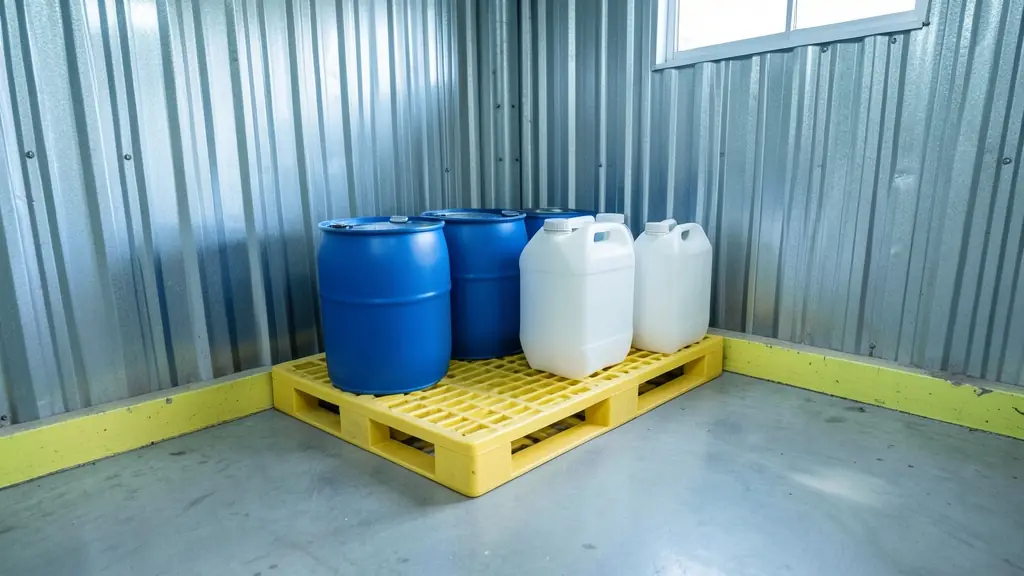
Twelve drums of old thinners in the back of a Germiston workshop, three years of used oil from a farm tractor shed, a garage shelf of pool acid and paint tins: none of it may go in a skip, a rubble truck or the council bin. Hazardous waste goes to a licensed handler, travels with paperwork and ends at a site licensed to take it. That trail protects you, because the law holds the producer responsible. Finding hazardous waste removal near me is mostly about finding a handler who can show the licence and give you that paper.
What counts as hazardous, at home and at work
At home: old paint, thinners, pool chemicals, pesticides, motor oil, car and lithium batteries, fluorescent tubes and the odd jar from a previous owner's shed. Many metros take small household amounts at certain drop-offs; check the municipality's list first.
At work: solvents, used oil and filters, oily rags, spent chemicals, sludges, contaminated packaging, lab and medical waste. This is industrial waste removal territory: a business that produces it has to use a licensed handler and keep records.
Storing it safely until the collection
- Keep each waste in its own sealed, sound container; never mix two chemicals to save a drum.
- Mark what is in each one clearly for the handler.
- Stand drums on a spill pallet or inside a bunded area, away from drains.
- Keep it under cover, out of the sun and away from ignition sources.
- Write down roughly how much there is, so the handler can bring the right vehicle.
The manifest and the safe disposal certificate
When a licensed handler collects, the load travels with a waste manifest that records what it is, how much and where it is going. Once it is treated or disposed of at a licensed site, you should receive a safe disposal certificate.
Keep both. They are your proof that the waste was dealt with properly, and auditors, insurers and inspectors ask for them. A collector who cannot offer them is not one to use, whatever the price. General waste removal contracts do not cover this.
Spills, leaks and contaminated soil
- If a drum has leaked onto concrete, contain it with absorbent, and the used absorbent becomes hazardous waste too.
- If oil or chemicals soaked into the ground, the soil is contaminated and cannot go out as ordinary soil removal.
- If an old farm dump or a bought property turns up buried drums, stop digging and ask a specialist to assess it before any site clearing.
- If anything reached a river or storm water drain, report it to the municipality.
What to put in your request
- What it is: solvents, oils, chemicals, tubes
- Roughly how much and in what containers
- Whether any of it is unknown or unmarked
- Where it is stored and how a vehicle gets in
- That you need a safe disposal certificate
Hazardous Waste Removal for homes, builders, sites, complexes and farms
- Homeowners: old paint, pool chemicals, batteries and garage leftovers that cannot go in the bin
- Builders and renovators: leftover paints, solvents, sealants and contaminated tins from a finished job
- Developers and main contractors: contaminated soil, buried drums or fuel tanks found while preparing a site
- Complexes, estates and landlords: fluorescent tubes, batteries and paint from a complex's maintenance store, collected together
- Shops, offices and schools: workshops, printers, salons and labs with chemicals that need a licensed handler
- Factories, warehouses and mines: drums of solvent, used oil, sludges and spent chemicals with a manifest and certificate
- Municipalities, churches and NGOs: clinics, schools and depots with medical waste, lab chemicals or old pesticides
- Farms and smallholdings: old pesticides, used tractor oil, empty chemical drums and a leaking diesel tank