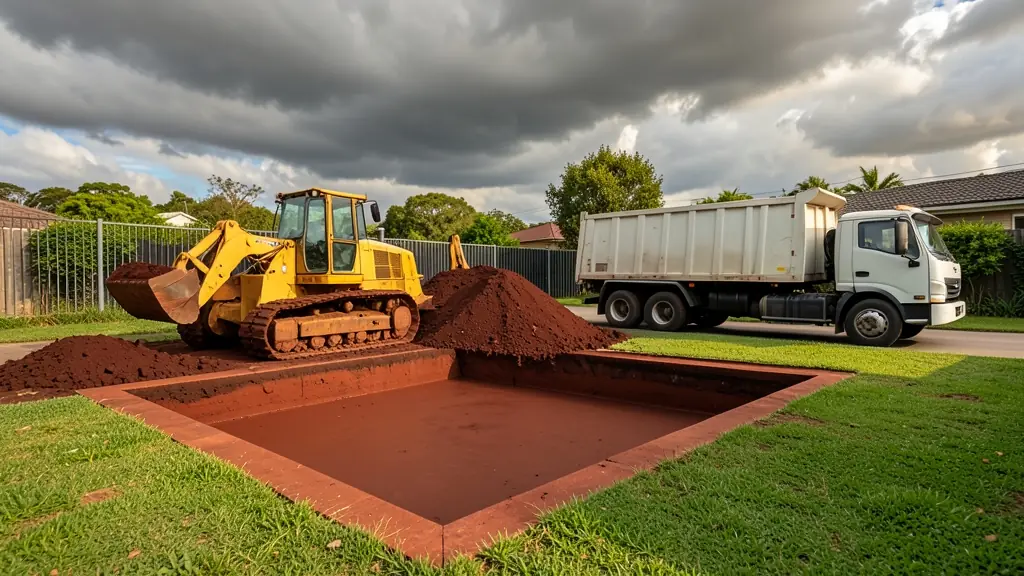
Dig a hole for a pool, a basement or new foundations and you will be surprised twice. The heap beside it is bigger than the hole, because soil loosens and swells once it is dug. Then the first truck leaves with less in it than you expected, because soil, and clay above all, is heavy, and a tipper reaches its weight limit before it looks full. Add a Highveld summer storm or Cape winter rain and the heap turns to mud. Planning soil removal well is mostly about those three things, and about finding someone who wants the soil.
Jobs that leave soil to move
- A pool or a pond in the back garden, often with tight access past the house.
- Foundation trenches and the soil from levelling a sloping erf.
- Basements and parking levels on bigger sites, measured in many truck loads.
- Lowering a garden or driveway, or taking out old topsoil before paving.
- Sand removal after a dune moves onto a coastal property or a drive.
Why a hole becomes a bigger heap
Soil in the ground is packed tight. Once dug it loosens, and clay and rocky soil gain more than sand. The truck carries the loose volume, so that is the figure to plan on. The rubble volume calculator works out both from the length, width and depth of the excavation.
Then check the weight. The truck loads calculator shows how many trips the soil needs by truck size, and how long loading takes by hand or by TLB. For bulk earthworks, see side tipper hire.
If it rains on your excavated soil
If the heap gets wet, then it gets heavier and sticky, and fewer cubes fit into each legal load. If trucks drive on a soaked lawn or a new driveway, then they sink or crack it; ask for boards or load from the street. If mud runs into the road or the storm water drain, then the municipality and the neighbours will notice. If the rain season is near, then book the trucks for the day the digging ends, not a week later.
Where to get rid of soil
Clean soil without rubble, roots or rubbish is often wanted: a builder down the road who needs fill, a farmer levelling a yard, a developer raising a stand. Good topsoil can go back into the garden. Soil mixed with rubble or old fill usually goes to a landfill instead. Contaminated soil from a workshop or a fuel spill is hazardous waste. For tipping, see dumping sites.
What to put in your request
- The size of the excavation or the heap
- The soil: sand, clay, rock or mixed with rubble
- Whether it is dry or wet right now
- How close a tipper can get, and the ground
- Whether the soil is clean enough to reuse
Soil Removal for homes, builders, sites, complexes and farms
- Homeowners: the soil from a pool, a pond or a lowered garden carted before the rains
- Builders and renovators: foundation trench soil moved off the stand so the slab can go down
- Developers and main contractors: basement excavations measured in many tipper or side tipper loads
- Complexes, estates and landlords: landscaping soil removed with trucks small enough for the estate's roads
- Shops, offices and schools: soil from new parking or a drive through lane carted after hours
- Factories, warehouses and mines: a yard levelled for new hardstand, with any oily soil kept apart
- Municipalities, churches and NGOs: sports field and school ground levelling, with clean fill reused nearby
- Farms and smallholdings: dam silt and soil moved to raise a yard or repair a farm road