
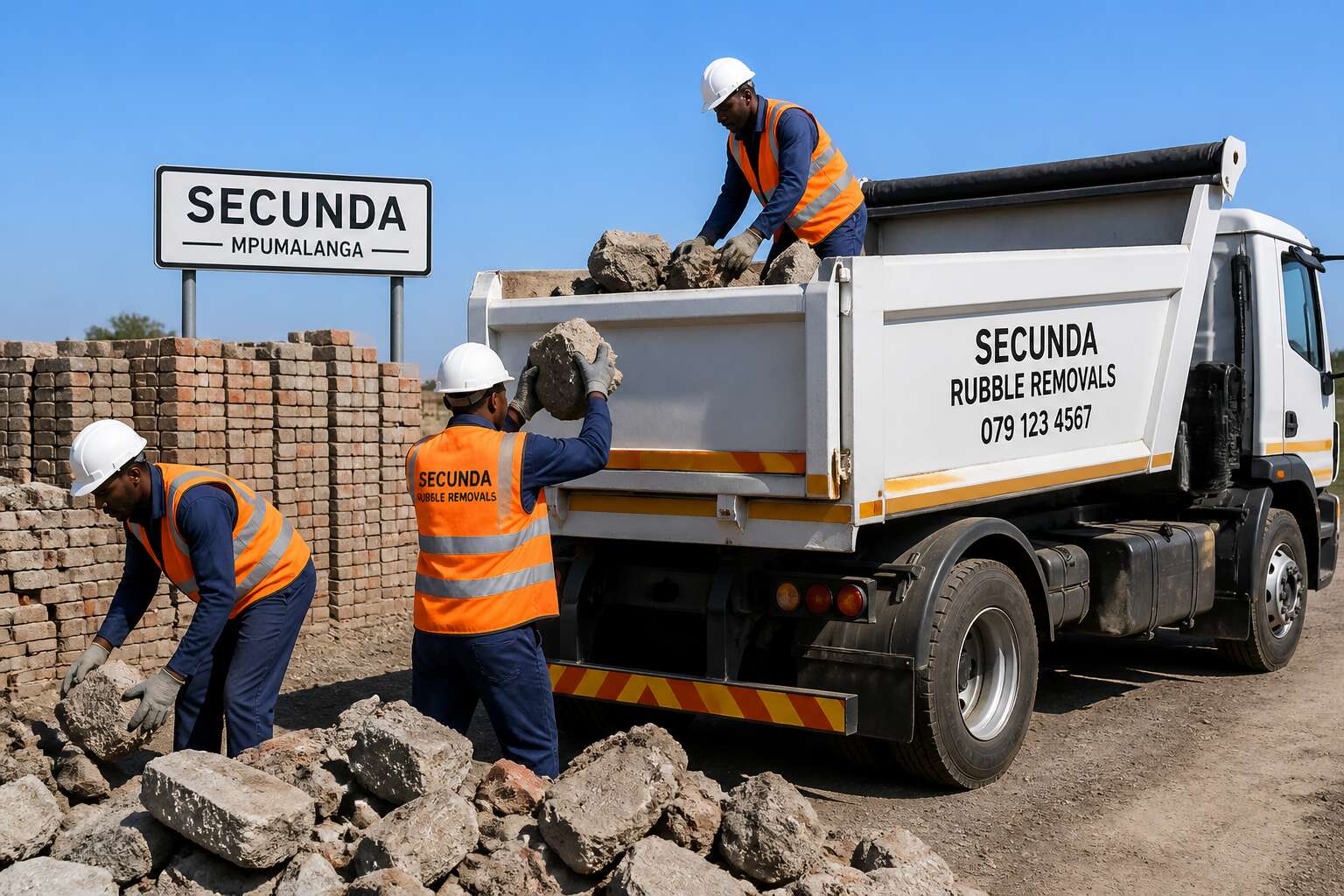
Common Types of Rubble and Debris in Secunda
Construction and Demolition Waste
Secunda’s demolition crews pull down aging industrial structures every week, leaving behind mountains of broken concrete, twisted steel, and splintered timber. This town, built on coal and chemical plants, produces construction waste with a distinctive industrial character. Understanding the material composition matters before any removal work begins.
When I walk through local demolition yards, I see the same categories repeated. Common debris types include:
- Concrete and masonry from foundations, walls, and paving
- Ferrous and non ferrous metals such as rebar, piping, and cabling
- Untreated timber from formwork, pallets, and roof structures
- Gypsum board, ceiling tiles, and mineral wool insulation
Each category demands specific handling. That knowledge allows for efficient rubble removal secunda, reducing risks and ensuring compliance with municipal regulations.
Garden and Landscaping Rubble
After the demolition crews pack up, Secunda’s gardens wage a quieter war. Between the coal dust and chemical haze, homeowners dig up buried pavers, ancient tree stumps, and clay soil that clings like guilt. This is landscaping rubble, and it differs from industrial waste in one key way: it always surprises you.
Your typical garden clearance turns up a motley collection, often including:
- Excavated clay soil from a fish pond project
- Broken paving slabs from a cracked pathway
- Pruned branches and stubborn root balls
- Old plant pots and rusted irrigation piping
Each load adds real weight and complexity to any rubble removal secunda effort. Hauling green waste to a landfill rarely makes sense, and local composting sites reject contaminated mixes. Sorting this debris takes a sharp eye and a stronger back. On the bright side, garden rubble rarely hides hazardous surprises, unless you count your neighbour’s unsolicited opinions on your lawn.
Renovation Debris
Renovation debris often contains materials that demolition ignores. When a Secunda homeowner upgrades a kitchen or bathroom, the old fixtures vanish behind new cabinetry. Yet the castoffs remain. Rubble removal secunda strategies must account for porcelain, ceramic, and composite board that resists compacting. A single renovation project produces a specific set of discarded materials. The typical haul includes:
- Ceramic toilet suites and glazed basins
- Laminate countertops with delaminated edges
- Gypsum board with paint and adhesive layers
- Copper piping and steel brackets
These materials demand separate sorting. Landfills accept some, but contaminated gypsum releases hydrogen sulphide when wet. Recyclers want the copper, but extracting it costs labour. Homeowners underestimate the volume of a simple revamp. Old bathroom fittings alone can exceed a cubic metre. Rubble removal secunda providers see this daily: renovation debris is heavier than it looks, and one item always forces a second trip.
Hazardous Materials
Some loads contain things that should never meet a landfill. Hazardous materials hide inside seemingly ordinary debris. Asbestos cement sheeting from pre-1980s roofs crumbles into fibres that lodge in the lungs. Lead-based paint flakes off window frames during demolition, contaminating the soil beneath. Old fuel drums, cleaning solvents, and pesticide containers surface in garage clearances across Secunda.
Rubble removal secunda teams identify these threats before loading. Each item requires specific handling and certified disposal routes. Common hazardous finds include:
- Asbestos roofing and insulation boards
- Lead-contaminated paint chips
- Used oil and chemical containers
- Refrigerant cylinders and compressors
The law in South Africa is strict about these materials. Mixing them with general rubble turns an ordinary load into a hazardous waste shipment. That changes cost, transport, and liability. A responsible rubble removal secunda service documents each hazard and follows the disposal chain from your gate to the licensed facility.
Selecting a Rubble Clearance Company in Secunda
Licensing and Insurance
An uninsured load of rubble becomes your problem the second the truck leaves the curb. In Secunda, hiring a clearance crew without checking their paperwork invites legal headaches that outlast the debris.
Before you agree to a rubble removal secunda job, ask for proof of two things:
- A valid waste carrier permit.
- Public liability insurance certificates.
Licensing verifies the company disposes of material legally. Insurance covers damage to your property or third parties. Call the issuing authorities to confirm both documents are current. A reputable rubble removal secunda operator supplies these without hesitation. A vague answer means you should look elsewhere.
Experience with Local Regulations
In Secunda, I have seen a routine clearance turn into a bureaucratic ordeal simply because a crew ignored municipal by-laws. A truck from Johannesburg lacks the nuance required to navigate Secunda’s specific landfill hours and local road weight limits. Without that knowledge, your rubble removal secunda job might stall at a gate or accrue unexpected fines.
Look for operators whose vehicles bear local markings and who can name their intended drop-off point without checking a map. Their expertise surfaces in small, practical ways:
- They schedule around traffic enforcement schedules.
- They know which documentation is required at the site weighbridge.
- They anticipate stormwater drain regulations before they become an issue.
This nuanced grasp of Secunda’s operational landscape ensures a simple haul remains a compliant transaction. That discernment defines the difference between a useful crew and a costly problem.
Pricing and Quotation Transparency
I have watched Secunda homeowners pay double their quoted estimate. The culprit was a fuel surcharge that materialised on the final invoice. Pricing transparency prevents that shock. It also prevents the awkward phone call where you argue over costs that should never have existed.
A credible rubble removal secunda operator issues a written quotation before any work starts. That quote breaks down load size, transport fee, and disposal costs in plain language. If a price seems too good to be true, ask for a site inspection. Honest companies insist on it.
Watch for these warning signs:
- Quotes that change once the truck arrives
- Vague line items like admin fees or handling charges
- Refusal to put the price in writing
The right crew itemises every cost. You know exactly what you pay for, from the first scoop to the final weighbridge ticket. Reliable rubble removal secunda operators want you informed, not surprised!
Equipment and Fleet Capabilities
A truck that breaks down mid-project costs you a day. A crew with the wrong attachment wastes two. Equipment determines whether rubble removal secunda happens on schedule or drags on for days.
Before you hire, ask what machines will actually arrive. A credible operator matches fleet size to the job:
- Tipper trucks for large volumes
- Skip loaders for tight driveways
- Excavators for heavy concrete
- Utility vehicles for garden debris
I have watched Secunda projects stall because a contractor promised a “multi purpose” vehicle that could not handle reinforced brickwork. The right equipment is not about brand names. It is about matching capacity to the site, the weight, and the access points. Confirm the truck’s cubic metre rating and the weighbridge proximity, and consider whether the fleet includes back up units!
Customer Reviews and References
Reputation in Secunda is built project by project. A company that performs reliable rubble removal secunda earns trust through visible results. Before you commit, request references from the last three months. Call those clients and ask about arrival times, crew conduct, and whether the final price matched the quote.
Patterns matter. One negative review could be a fluke. Two or three mentioning the same flaw suggest a real weakness. I have seen too many Secunda homeowners skip this step and regret it.
Useful details to gather from references:
- Was the site left clean and safe?
- Did the crew protect driveways and gates?
- Were delays communicated promptly?
Listen for hesitation in their answers. A satisfied client answers quickly. A lukewarm response often hides frustration. Choosing a rubble removal secunda partner without checking references is a gamble you do not need to take.
The Step-by-Step Rubble Removal Process
Initial Site Assessment
The true cost of rubble removal secunda is decided before the first shovel touches the ground. A site assessment is not a formality. It is the moment when the weight of the debris, the condition of the soil, and the limits of access become visible. I have seen contractors quote without a site visit, and the result is always the same: a stalled truck, a damaged lawn, or a demand for extra fees.
The assessment begins with the load itself. We identify whether the material is brick, concrete, or a mix of contaminated soil. This matters because certain rubble cannot be reused. We then measure the volume in cubic metres, which sets the trip count and the hours.
The order of operations is strict:
- inspect the ground for stability and drainage
- locate buried services and underground cables
- mark the drop zone for the skip or truck
A single misstep is costly. Rubble removal secunda demands this precision.
Sorting and Segregating Waste
Once the site assessment is done, the real work begins: sorting. Rubble removal secunda is not a single scoop and go operation. It is a methodical exercise in waste triage. Concrete gets separated from bricks. Metal is pulled out with magnets. Wood is stacked for recycling. This segregation matters because it determines where each load ends up and how much landfill space you pay for. We sort on site using a simple hierarchy:
- Reusable materials get a second life
- Recyclable waste goes to processing facilities
- Residual rubbish heads to the landfill
This process reduces disposal fees and keeps the load honest. A mixed load is an expensive load, and no one wants to pay premium rates for someone else’s rusty pipes.
Load and Haulage
A single truckload of demolition debris can weigh over twenty tonnes. That mass influences every decision in the load and haulage phase of rubble removal secunda. After sorting, the remaining materials demand a transport strategy. We size the vehicle to the debris, not the other way around!
The sequence follows a strict rhythm:
- Weighbridge verification before departure
- Tarped loads to prevent dust and debris spillage
- Permitted landfill routes that avoid residential congestion
- Documentation of disposal certificates for your records
In our experience, each haulage run carries its own variables. Wet concrete adds unexpected mass. Steel reinforcement skews weight distribution. Our drivers account for these factors before the first gear shifts. The load is secured, weighed, and dispatched with a destination that matches the waste classification. This precision keeps rubble removal secunda efficient and keeps your site safe for the next phase of work.
Disposal or Recycling
Around 80% of demolition debris can be diverted from landfills, and that figure drives our disposal and recycling phase. Once the rubble arrives in Secunda, we sort by material type. Concrete is crushed for future aggregate. Metals are pulled for scrap recovery. Clean wood becomes mulch or biomass. What remains, typically mixed waste, is routed to a licensed landfill site.
Here is the sequence we follow on site:
- Unload and weigh each truckload against the manifest.
- Screen for contaminants like asbestos or paint residue.
- Process recyclable fractions with magnets and crushers.
- Issue disposal certificates for your compliance records.
This method keeps rubble removal secunda efficient and transparent. Recycling shortens haulage distances, and proper disposal protects the local water table. Every step gets logged, so your audit trail stays clean. The result is a site that is ready for the next phase without hidden environmental costs.
Site Clean-up and Final Inspection
The true test of a rubble removal job is the moment the last truck leaves the gate. That is where site clean-up and final inspection begin. We rake through the transition zone for missed chunks of concrete, buried rebar, plastic sheeting, and surprise hazards that could snag a future foundation.
Our crew walks the perimeter in a grid pattern, documenting every square metre. We mark low spots, compact loose soil, and confirm that the surface matches the agreed level. Then we run a simple but effective checklist:
– Confirm the load manifests match the disposal certificates.
– Check for windblown debris along boundaries and fences.
– Verify that drainage paths are clear of silt and rubble.
Only then do we sign off. For rubble removal secunda, this final pass is what separates a cleared site from a ready-to-build one.
Cost Factors Affecting Rubble Removal in Secunda
Volume and Weight of Rubble
Volume and weight set the foundation for any rubble removal secunda quotation. A cubic metre of mixed construction rubble weighs roughly 1.5 to 2 tonnes, while concrete sits heavier at around 2.4 tonnes per cubic metre. That difference matters because providers charge per load or per tonne, and a small shift in density changes the final figure.
When I assess a site, I study the space the debris occupies and the material composition. Brick, tile and plaster all pack differently. A pile of broken roof tiles may match the size of a concrete slab pile, yet the concrete is far heavier.
The tricky part lies in the voids. Hollow bricks, pipes and steel frames trap air, making the pile look bulkier than its true weight. Once loading begins, that air escapes, and the rubble settles into a denser mass. A contractor who quotes purely on visual volume may misjudge the load, either overestimating the tonnage or underestimating the space required. Measuring the actual dimensions and applying the correct density factor for each material type delivers a far more accurate price estimate.
Type of Debris and Disposal Fees
Cost factors in rubble removal secunda go beyond simple volume. The type of debris changes everything. Mixed building waste demands more handling than clean concrete. Each load must be sorted before it reaches the landfill, and sorting costs money.
Disposal fees also vary by facility. Municipal landfills charge per tonne, but private waste sites often add surcharges for contaminated loads. Tyres, asbestos, and treated timber trigger higher rates. Some facilities reject certain materials outright.
- Clean fill: lowest disposal fee
- Mixed construction waste: moderate fee
- Hazardous or contaminated debris: highest fee
That is why a rubble removal secunda quote should break out disposal costs separately. If the provider cannot itemise the landfill charges, you are likely paying for hidden margins.
Distance to Landfill or Recycling Centre
Every kilometre matters when a truck carries rubble across Secunda. Distance to the landfill or recycling centre is a quiet but constant factor in the final price. Fuel, driver hours, and vehicle wear accumulate quickly, especially when the nearest disposal site sits on the far side of town.
Providers with local depots can offer lower rubble removal secunda rates. Those who must travel to outlying facilities build that extra mileage into the quote. A crew that spends an hour on the road is an hour not spent on the next job.
– Fuel surcharges on long hauls
– Additional crew hours for travel
– More frequent vehicle maintenance
Distance is not a fixed cost. It shifts with traffic, road conditions, and the facility’s location. A provider who knows the area will route around delays, and that efficiency shows in the final rubble removal secunda invoice.
Accessibility and Labour Requirements
Accessibility is rarely the first thing on your mind when you stare at a mountain of broken concrete, but it should be. When you request a rubble removal secunda estimate, a pile sitting 20 metres from the driveway is a different challenge from one tucked behind a locked gate and a clothesline. The gap between the pile and the truck is filled by human muscle, and muscle costs money.
The factors that shape the labour bill are:
- The width of gate openings and whether a large vehicle can pass
- Slope gradients that make wheelbarrow work treacherous
- The distance from the pile to the loading point
Each metre of carrying distance multiplies labour time. A crew that spends the morning hauling rubble through a narrow passage is not a slow crew, it is an honest one. For rubble removal secunda, expect the price to reflect the difficulty of reaching the rubble.
Urgency and Scheduling
Time is a silent enemy in rubble removal. A pile left waiting through a Secunda downpour becomes heavier, messier, and more dangerous to handle. Urgency changes everything. When you need a site cleared before a build or inspection, the calendar dictates the price. Crews who reshuffle their schedule to accommodate yours charge for that flexibility.
The scheduling factors that matter:
– Lead time between your call and the actual arrival
– Whether the job falls on a weekend or public holiday
– Seasonal weather windows that can make or break access
For rubble removal secunda, a rushed booking often means overtime wages and diverted equipment. That cost lands on your quote. Plan ahead where possible. If you cannot, expect the urgency to carry a premium, and understand why. Time is not just money. In this trade, time is also safety.
Additional Services
Most quotes for rubble removal secunda cover the truck and the dump, but the real surprises appear in the extras. You might need the crew to sweep the floor after the load is gone, or perhaps you require a bobcat to reach a narrow backyard. These services are often billed separately. A breakdown before you commit is wise, because a vague estimate can increase by a third.
- Pressure washing concrete surfaces post haulage
- Supply and placement of compacted soil or sub-base
- Demolition of small structures like garden walls
Each add-on carries its own labour and equipment costs. In Secunda, where rain can turn a cleaned site into a bog, a quick final sweep might save you a headache later, but it still costs an hourly rate. Nothing is automatically bundled. A transparent quote for rubble removal secunda should itemise these options clearly.
Environmental and Safety Regulations for Rubble Disposal
Local Municipal Bylaws
In Secunda, municipal records track every illegal dump site. Unregulated disposal leads to fines and remediation orders. The local regulations require any rubble removal secunda project to follow strict environmental protocols. Fines for improper disposal can reach R10,000 per violation.
The municipality issues permits for certain waste streams. Asbestos, treated timber, and contaminated soils demand separation at the source. During transport, a covered load is non-negotiable.
Typical bylaw stipulations include:
- Using only designated disposal sites
- Maintaining records of waste volume and origin
- Submitting to spot inspections
Neglecting these rules invites audits and heavy penalties. Site safety and community health depend on this compliance. No municipal officer will accept ignorance as a defence.
Recycling and Reuse Opportunities
Secunda’s landfill airspace is finite, and that reality is reshaping the rubble removal secunda sector. Environmental compliance now demands aggressive sorting, not simply hauling debris to a tip. Recovered concrete and brick feed mobile crushers, producing aggregate for road base. Extracted rebar heads to scrap yards, reducing reliance on virgin ore.
Safety regulations cover more than load securing. Crews handling silica-laden rubble require respiratory protection, and vehicles must undergo washdown before leaving site. The Occupational Health and Safety Act obligates contractors to document risk assessments for every project.
- Reuse crushed masonry as trench backfill
- Salvage intact bricks for architectural reuse
- Screen excavated soil for landscaping blends
These reuse pathways cut haulage distances and preserve remaining landfill capacity.
Permits for Large-Scale Waste
Large scale rubble disposal in Secunda requires a permit from the Department of Forestry, Fisheries and the Environment. The application demands a waste manifest, proof of lawful site ownership, and a detailed environmental management plan. Without these documents, contractors face penalties that can halt projects entirely.
Authorities inspect each load against the manifest, and discrepancies trigger immediate fines. Safety regulations require on-site supervision during offloading, and hazardous materials mixed with civilian waste invalidate the permit on the spot.
- Submit sampling data for asbestos screening
- Obtain written approval from the landfill operator
- Maintain weighbridge tickets for every trip
Rubble removal secunda contractors who follow these protocols shield their clients from legal liability. Permit compliance also shortens approval timelines for future works, keeping large projects on schedule.
Safety Precautions for DIY Removal
Dumping rubble in Secunda without checking what is inside can lead to a fine. A bag of cement dust looks harmless, but add water and it becomes caustic enough to irritate skin. DIY removal demands the same respect for materials as a commercial operation. Rubble removal secunda contractors do not skip the boring safety steps, and neither should you.
Wear gloves, safety glasses, and a dust mask. Sort materials on site. Keep contaminated loads separate.
- Check for protruding nails and wire
- Wet down dusty debris before loading
- Never burn rubble or bury it on your property
The environment department does not distinguish between a builder and a homeowner when it comes to illegal dumping. Water runoff from rubble can carry chemicals into storm drains. The result is a polluted Vaal River and a hefty fine. If you are unsure about disposal rules, ask a rubble removal secunda professional for guidance before you load the trailer.
Penalties for Illegal Dumping
Secunda’s stormwater drains connect directly to the Vaal catchment. Rubble dumped on vacant land does not stay there. Paint, adhesive, and treated timber leach chemicals into the soil. Rain pushes them into groundwater. The municipality’s response is swift. Fines for illegal dumping begin at R2,000 and multiply for repeat offences.
Enforcement follows a predictable sequence:
- A municipal inspector documents the load.
- The property owner receives a contravention notice.
- The fine arrives within 14 days.
- Repeat violations escalate to criminal prosecution.
Every contractor offering rubble removal secunda carries the same obligation. The law does not soften for weekend projects. I have seen a single bakkie load on a quiet road reserve turn into a criminal matter. Rubble removal secunda operators hold current disposal permits and know which landfill sites are licensed for construction waste. That knowledge separates a lawful load from a costly mistake.
0 Comments