
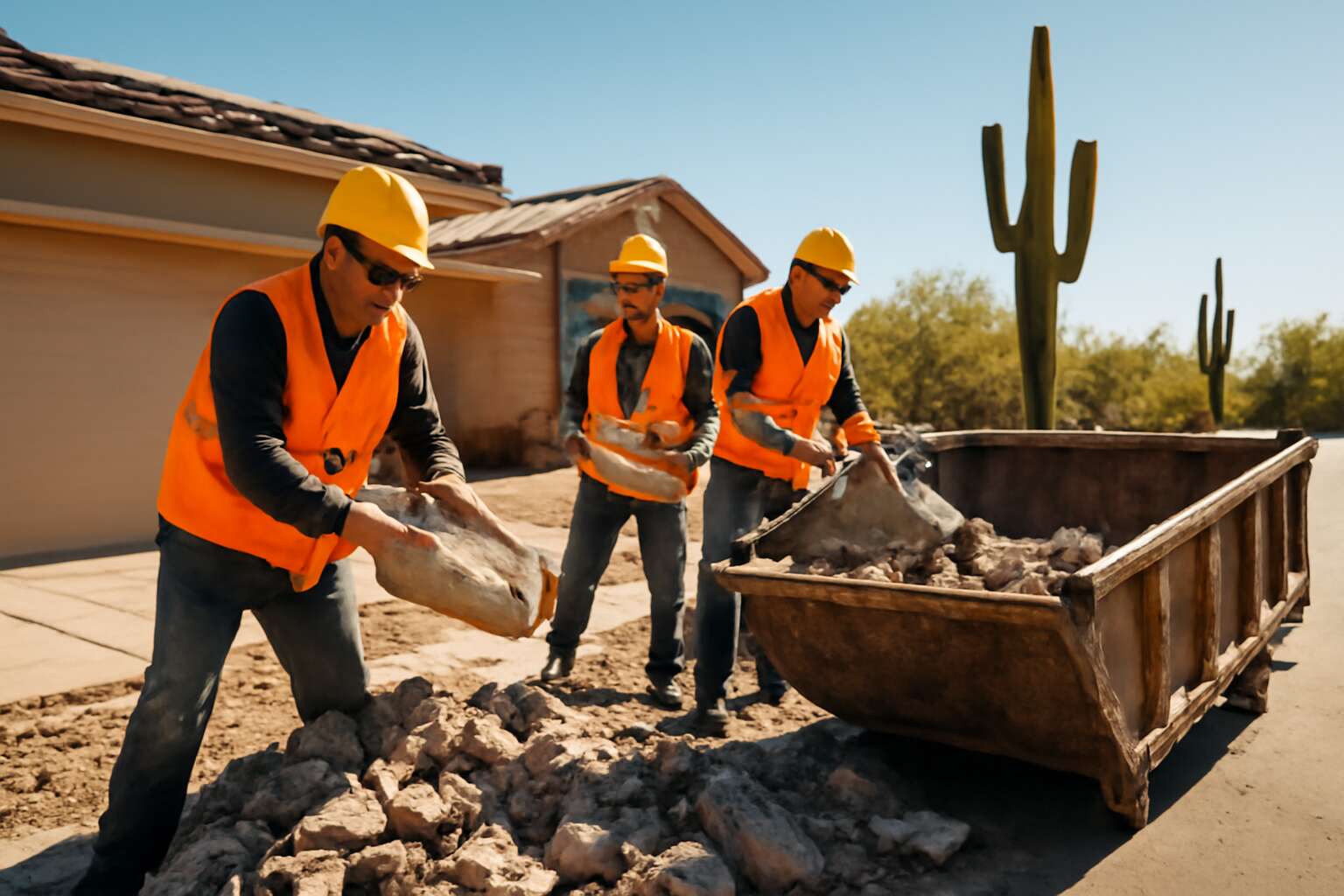
Rubble and debris removal services in Phoenix
Service types for construction debris in Phoenix
On a Phoenix construction site, rubble removal in phoenix is more than a service—it’s acceleration. Up to 30% of delays stem from debris bottlenecks, so clearing waste isn’t a luxury; it’s a KPI. Teams stay on schedule when a clean site keeps trades humming.
Our service types for construction debris in Phoenix span the whole spectrum—from on-demand pickups to full-site cleanups. We offer roll-off containers, scheduled curbside sweeps, and precise load-outs that minimize nuisance and maximize site safety. When you partner with us, you gain predictability and compliance without the drama.
- Residential construction debris removal
- Commercial job-site cleanup and roll-off rental
- Concrete, brick, and tile recycling
- Scrap metal haul-away and recyclables
Site morale improves; fewer trips, neater aisles, and a better look for clients. It’s practical wit that makes a Phoenix build feel glamorous—until you realize it’s well-planned waste management. Across South Africa, sites stay tidy and on schedule.
Common project scenarios and solutions
Phoenix builders know debris bottlenecks aren’t trivia; they steal time and budgets. In fact, roughly 28% of project delays trace to rubble on site, clogging access and patience. That’s why rubble removal in phoenix is treated as a KPI, not a nicety.
Think common project scenarios: a residential remodel that sprouts debris like dandelions; a boutique fit-out where plaster dust becomes a mood; or a site where old concrete meets the shovel. In these moments, timely cleanup keeps trades from staring at taped-off tape.
We tailor solutions to the moment—predictable pickups, efficient load-outs, and compliant disposal that won’t derail the budget or the client’s timetable. A tidy site isn’t vanity; it’s momentum wearing practical boots.
What sets professional rubble removal apart in Phoenix
In Phoenix, clean sites translate to completed projects. “Rubble is the clock that ticks budgets,” a veteran site supervisor once said, and that clock keeps quiet only when debris is cleared on schedule.
Professional rubble removal in phoenix distinguishes itself through predictability, compliant disposal, and respect for trades pacing. With dedicated crews and real-time coordination, debris is removed before it becomes a bottleneck, keeping electricians and carpenters moving rather than staring at taped-off tape.
Key differentiators include:
- Predictable pickups align with trades
- Disposal that meets local codes
- Transparent invoicing and reporting
For South African builders following Phoenix standards, the emphasis on on-site order and compliant disposal resonates as a universal best practice.
Momentum wears practical boots on a Phoenix job—and these crews are all about keeping the project moving with minimal disruption.
Waste disposal methods and sustainability
Phoenix projects can generate hundreds of tons of rubble per large site, and that pace can make or break a schedule. When you’re chasing a clean build, every ton counts. That’s why rubble removal in phoenix is treated as a timeline staple, not an afterthought—keeping crews moving and budgets intact.
Disposal methods now emphasize sustainability and local compliance. Debris is sorted on site, with concrete crushed for reuse, metals recycled, and wood reclaimed where possible. Transparent reporting tracks every load and disposal destination to satisfy codes and client expectations.
- On-site sorting and separation of recyclables
- Concrete crushing for aggregate and road base
- Salvage of metals and timber for reuse
- Certified disposal that meets local codes
For South African builders following Phoenix standards, this disciplined approach minimizes disruption and strengthens budgets. Rubble removal in phoenix becomes a measurable part of project momentum rather than a last-minute nuisance.
Pricing and budgeting for Phoenix debris cleanup
Factors that influence pricing
Rubble removal in phoenix can swing from a modest few hundred to a staggering several thousand, depending on the haul and how quickly you want it cleared. That’s why a tight budget needs room for surprises—heavy concrete, mixed debris, or awkward access that turns a simple lift into a logistical puzzle.
Pricing hinges on several core factors. The list below flags the usual suspects in the budget math for rubble removal in phoenix:
- Volume and weight of material
- Debris type, especially heavy or hazardous waste
- Site access and load-time challenges
- Disposal and permit fees
- Timing and scheduling pressures
- Distance to disposal facilities
Across markets, including South Africa, these drivers shape quotes for rubble removal in phoenix, and reputable crews spell out what’s included so the bottom line isn’t a mystery.
Typical cost ranges for Phoenix projects
In Phoenix, the cost of clearing debris often feels like weather you can’t predict—the forecast shifts with weight, access, and disposal quirks. A modest lift can become a maze of charges, and a tight schedule can push the total higher than expected. The rhythm of price swings keeps builders on their toes and budgets surprisingly pliant.
Pricing and budgeting hinge on a few constants, and rubble removal in phoenix is no exception. Typical cost bands start with a few hundred dollars for small, easy lifts and climb toward the thousands for bulky or awkward sites. The quote should spell out what’s included, so the bottom line doesn’t drift into mystery.
- Light loads up to 0.5 ton: $200–$500
- Medium loads 0.5–2 tons: $500–$1,800
- Heavy or complex sites: $1,800–$5,000+
Hidden fees and how to avoid surprises
For rubble removal in phoenix, budgeting feels like chasing a shifting horizon—unpredictable yet manageable with a sharp eye for detail. A written, itemized quote that breaks out labor, haulage, disposal, and any permits helps you see the true bottom line and spot surprises before they arrive.
Hidden fees tend to creep in when charges are rounded, fuel surcharges apply, or site access is treated as a premium. The remedy is insistence on transparency and a fixed scope before work starts, so you can compare apples to apples across quotes.
- Itemize every component: labor, equipment, tipping/landfill fees, and transport
- Clarify whether tonnage or volume governs charges
- Ask about surcharges for access, after-hours work, or weather delays
- Confirm cancellation policy and any minimum fees
With these guardrails, the journey from estimate to completion stays readable, and the final total remains faithful to the plan—keeping rubble removal in phoenix on a steady, predictable track.
Financing and payment options for debris cleanup
rubble removal in phoenix can feel like chasing a moving target—yet precision is within reach when you have a fixed, itemized quote. A solid plan reads out labor, equipment, tipping/landfill fees, transport, and permits, revealing the true bottom line. Many quotes hinge on tonnage or volume, so a fixed scope helps prevent surprises and keeps comparisons apples-to-apples.
Financing and payment options for debris cleanup offer relief for budgets in flux. In SA, expect a structure with a small upfront deposit and progress payments, with the balance due on completion. Payment methods vary—EFT, credit card, or online transfers—and some providers connect clients with local lenders for short-term financing, turning a daunting project into a predictable plan.
How to pick a debris removal company in Phoenix
Criteria for evaluating removal companies
On a Phoenix site, the clock runs louder than the jackhammer. For rubble removal in phoenix, you want a crew that shows up on time, communicates clearly, and doesn’t treat your project like a last-minute garage sale. The right company blends safety, efficiency, and a bit of swagger—without over-promising.
- Licensed and insured to cover all mishaps
- Experience with your debris type (construction, yard waste, bulky items)
- Transparent pricing with no hidden surcharges
- Responsible disposal and recycling practices
- Proven safety record and adherence to local regulations
Look for references, timely quotes, and a philosophy of keeping sites clean and compliant. Across borders—South Africa included—the core criteria stay the same: licensed, insured, experienced, and committed to responsible disposal.
Questions to ask during quotes
Phoenix projects don’t wait for a lull in the noise — the clock is louder than the jackhammer. Concrete and clutter are more merciless than a heatwave, so you deserve a debris crew that shows up on time, communicates clearly, and keeps the site tidy even when the wind shifts. For rubble removal in phoenix, asking the right questions upfront saves headaches later—and these questions travel across borders, from Phoenix to South Africa.
- Are you licensed and insured to cover all mishaps?
- Do you have experience with my debris type (construction, yard waste, bulky items)?
- Is pricing transparent with no hidden surcharges?
- What are your disposal and recycling practices?
- Can you share references and a safety record?
Certifications and insurance to look for
Certifications and insurance to look for glitter like distant stars when the night hisses. In rubble removal in phoenix, credentials aren’t mere decoration — they’re the shield before the storm. A licensed operator with active insurance stands as your first line of defense against liability and delay amid the furnace of progress.
- Licensed and insured with active coverage
- Proof of workers’ compensation and general liability
- Current license numbers and jurisdiction compliance
- Disposal credentials and safety certifications
Beyond the paper, seek a safety record and references that attest to punctuality, clear communication, and tidy sites even as the wind shifts. These standards travel across borders, from Phoenix to South Africa, carrying a promise that your project will endure the night.
Red flags and warning signs
For rubble removal in phoenix, choosing a debris removal company wisely can save weeks of disruption. Look beyond glossy brochures and demand a clear scope, timeline, and disposal plan. A reputable crew will visit the site, assess needs, and put milestones on paper rather than leaving questions to the wind.
Red flags and warning signs to pause on:
- Unlicensed or uninsured operators
- No on-site assessment or detailed quote
- Vague scope and impossible deadlines
- Upfront payment demands or cash-only terms
- No disposal or recycling plan
- Flimsy references or documented safety issues
Spotting these indicators early helps protect timelines, budgets, and safety. This approach translates well for readers in South Africa, too, keeping projects on a steadier course.
Permits, regulations, and environmental considerations in Phoenix debris removal
Local permits required for large debris removal
Permits, regulations, and environmental considerations shape every rubble removal in phoenix. A clean site is more than cleared rubble; it’s compliance in action. For rubble removal in phoenix, permits are non-negotiable. As one project manager says, ‘permits save time and money’—and they keep crews safe while neighbors breathe easier. That matters!
Here are the core permit and regulatory checkpoints that shape schedules.
- Local permits from city/county authorities
- Regulatory reviews for waste handling and dust control
- Evidence of disposal plans at certified facilities
Environmental considerations keep the desert landscape intact. Dust suppression, stormwater controls, and faithful disposal protect air and water quality. Efficient debris practices reduce traffic and noise, helping communities breathe easier while projects move forward.
Environmental impact considerations in Phoenix
Rubble removal in phoenix is as much about timing as it is about dirt and dust. Permits are non-negotiable, shaping the route, the crew, and the calendar. “Permits save time and money,” a project manager once told me, and the truth settles in when the first truck rolls out!
- Local permits from city/county authorities
- Regulatory reviews for waste handling and dust control
- Evidence of disposal plans at certified facilities
Rubble removal in phoenix also packs environmental responsibilities. Environmental considerations keep the desert intact. Dust suppression, stormwater controls, and faithful disposal protect air and water quality. Efficient debris practices reduce traffic and noise, helping communities breathe easier while projects move forward. In this balance, the landscape thrives and neighbors see progress rather than disruption.
Waste diversion and recycling opportunities
Phoenix’s landscape shifts fast, and so do the debris rules. “Permits save time and money,” a project manager noted, and that wisdom lands squarely on rubble removal in phoenix. Local permits from city and county authorities shape routes, crews, and calendars, while regulatory reviews for waste handling and dust control keep projects honest. Disposal plans at certified facilities aren’t bureaucratic ornament—they keep progress rolling.
- Recycled concrete and masonry aggregates for base layers
- Metal salvage and separate recycling streams
- Wood, cardboard, and pallets repurposed or donated
Environmental considerations keep the desert intact. Dust suppression, stormwater controls, and proper disposal protect air and water quality. Efficient debris practices reduce traffic and noise, helping communities breathe easier while projects move forward. This balanced approach defines rubble removal in phoenix—keeping the desert blissfully debris-free.
Coordinating with city services and timelines
Headlines are made in the planning room, not on the dump site. Permits, timelines, and accountable partners steer work before heavy equipment grinds the first rock. “Permits save time and money,” a project manager reminded me, and that wisdom anchors rubble removal in phoenix as it transitions from blueprint to ground truth.
Coordinating with city services means syncing with inspectors, utility providers, and right-of-way teams within defined windows to avoid gridlock. Practical steps:
- Secure approvals with city and county offices early, aligning permit timelines with the project calendar.
- Schedule inspections and routing permissions to minimize disruptions to neighbors and traffic.
- Maintain concise, audit-ready records to satisfy regulatory reviews and ensure ongoing compliance.
Environmental safeguards sit at the core of every decision, balancing progress with community stewardship while debris moves along the schedule.

0 Comments