
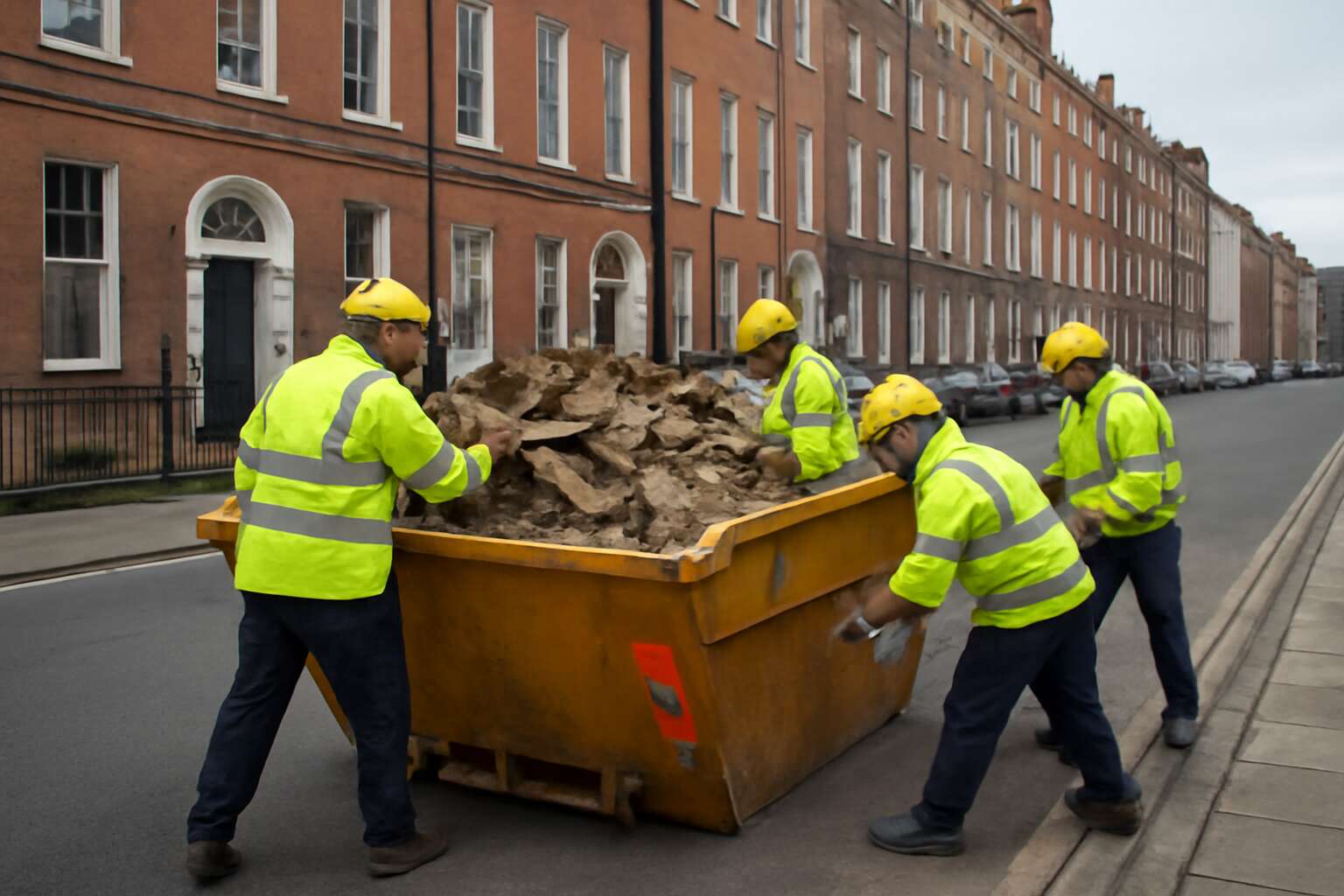
Rubble Removal in Dublin: Services Overview
Types of rubble removal services in Dublin
“A clean site is a safe site,” says a Dublin builder, and that line sticks. In rubble removal dublin, staying on top of debris keeps projects moving—80% of delays arise from clutter, not ambition!
With rubble removal dublin on the job, we cover a practical spectrum: residential clear-outs, renovation debris, and construction-site cleanup. We handle loading, transport, and disposal with speed and compliance, prioritising recycling where possible and meeting local regulations.
- Residential rubble clearance
- Construction debris removal
- Concrete, bricks and soil recycling
From small kitchens to multi-storey developments, rubble removal dublin keeps the job moving with efficiency, reliability, and a human touch.
Who typically uses rubble removal services in Dublin
On Dublin building sites, speed and order aren’t optional extras—they’re lifelines. A fresh stat pegs project delays at a hefty 65% when debris runs amok. The punchline is blunt: rubble doesn’t tidy itself, and a cluttered site leaks time and money. rubble removal dublin is the steady hand that keeps momentum alive, even when weather or deadlines conspire against you.
rubble removal dublin covers a practical spectrum: residential clear-outs, renovation debris, and construction-site cleanup. We handle loading, transport, and disposal with speed and compliance, prioritising recycling where possible and meeting local regulations. With us, the skip becomes a signpost—pointing tradesmen toward a clean, efficient day’s work.
Who typically uses rubble removal dublin services?
- Homeowners tackling a kitchen or extension
- Developers managing multi-unit builds
- Property managers handling turnovers and cleanouts
For South African crews accustomed to tight deadlines, Dublin’s pace, backed by rubble removal dublin, feels both challenging and energising.
Typical project scopes for rubble removal in Dublin
On Dublin building sites, debris can steal precious momentum—project delays climb by as much as 65% when waste runs amok. rubble removal dublin stands as a steady hand, keeping crews moving when weather and deadlines test nerves.
We offer end-to-end support: loading, transport, and disposal, all carried out with speed and strict adherence to local regulations. Recycling is prioritised, and every load is channelled toward responsible streams. For South African crews accustomed to tight deadlines, Dublin’s tempo becomes energising with this reliable partner.
- On-site loading and segregation to streamline waste streams
- Timely transport to licensed facilities with traceable disposal records
- Recycling-focused disposal and clear waste reporting
Typical project scopes in Dublin extend beyond mere waste removal, embracing space planning, site tidying between trades, and post-job handovers that leave the area immaculate. rubble removal dublin
Key factors in selecting a rubble removal provider in Dublin
In Dublin, project delays climb by as much as 65% when waste runs amok. Rubble removal dublin acts as a steady hand that keeps crews moving—loading, transport, disposal under strict local regulations. Recycling is prioritized, guiding loads toward responsible streams and turning chaos into order.
On-site loading and segregation streamline waste streams, while timely transport ensures disposal at licensed facilities with traceable records. What a relief to watch the pace stay steady while the site breathes easier!
- On-site loading and segregation to streamline waste streams
- Timely transport to licensed facilities with traceable disposal records
- Recycling-focused disposal and clear waste reporting
Typical project scopes in Dublin extend beyond waste removal, embracing space planning, site tidying between trades, and post-job handovers that leave the area immaculate. This approach speaks to South African teams seeking reliability, turning a potentially chaotic transition into a clean, workable rhythm.
Common challenges and how to address them
Rubble removal dublin keeps construction sites moving when timelines hang in the balance. A steady hand on loading, transport, and disposal under strict local rules can save days. In Dublin, project delays climb by as much as 65% when waste runs amok, and that chaos drags down budgets and morale. That’s the difference!
- Unsegregated waste streams
- Permit and access bottlenecks
- Fragmented disposal traceability
That flow becomes proof when teams lean on on-site loading with robust segregation, timely transport to licensed facilities, and transparent disposal records. For South African readers assessing Dublin partners, reliable service turns a chaotic transition into a clean, workable rhythm.
Regulations, Permits, and Compliance in Dublin
Local regulations governing waste disposal in Dublin
In Dublin, regulations choreograph every load of rubble with a careful, almost ceremonial precision. Local councils demand safety, proper segregation, and traceability, ensuring the journey from site to tip is transparent and lawful. This is the heartbeat of rubble removal dublin.
Compliance hinges on partnering with licensed operators and holding robust records. Licensing checks, consistent documentation, and disposal at permitted facilities form the quiet backbone of responsible work, keeping crews aligned with the city’s environmental ambitions and the letter of the law.
Non-compliance invites penalties, corrective orders, and reputational damage. Dublin’s enforcement teams expect strict adherence to waste codes, and conscientious firms treat compliance as a core value, a steady beacon that keeps every site pristine and every transaction above board.
Permits required for construction debris clearance
Regulations in Dublin choreograph every load of debris with careful precision. Every tonne moves under a watchful eye—one misstep can delay a project by days. In rubble removal dublin operations, safety, proper segregation, and traceability aren’t optional—they are the law. The city’s rules weave compliance into every site visit, keeping work transparent and accountable.
Permits required for construction debris clearance lay the framework for lawful waste handling. The approval cycle moves with the project, like a quiet sentinel guiding disposal at permitted facilities.
- Waste collection and transfer permits
- Evidence of disposal at an authorized facility
- Waste transfer notes documenting every handoff
Compliance is the spine of every engagement. Non-compliance invites penalties, delays, and reputational damage; robust record-keeping and disposal at permitted facilities keep crews aligned with the city’s environmental ambitions and the letter of the law.
Compliance with Dublin City Council waste guidelines
Regulations govern rubble removal dublin as tightly as a site blueprint. ‘Compliance isn’t a cost, it’s a schedule,’ says a Dublin site manager. In this city, every load is tracked from the first scoop to the last disposal.
Regulatory guidelines from Dublin City Council frame how waste is handled, sorted, and reported. Compliance isn’t paperwork for its own sake; it keeps projects moving and communities safe.
- Each load leaves a traceable trail from site to disposal.
- Disposal occurs only at facilities approved by the authorities.
For South Africa audiences, the discipline behind Dublin’s approach translates into tighter records, clearer responsibilities, and fewer hold-ups on site.
Common regulatory pitfalls to avoid
In Dublin, rubble removal dublin isn’t just hauling debris—it’s a legal choreography. Every skip load is tracked, every transfer witnessed, and disposal notes are time-stamped and filed. Compliance isn’t a mood you switch on; it’s the rhythm of the site.
Permits, facility approvals, and diligent documentation keep the chain intact. This discipline translates into fewer hold-ups and clearer accountability—precisely the backbone of the workflow.
Common regulatory pitfalls include:
- Unclear ownership of waste streams
- Lapses in disposal receipts or chain-of-custody records
These dynamics matter across tight waste management and beyond.
For South Africa audiences, the discipline behind Dublin’s approach translates into tighter records, clearer responsibilities, and fewer hold-ups on site.
Documentation and reporting requirements for compliance
Regulations around rubble removal dublin aren’t bureaucratic cruelties; they’re the quiet engine that keeps projects on track. “If it isn’t documented, it didn’t happen,” a Dublin site lead once told me, and that sentiment anchors every move from the skip to the disposal yard. The discipline of airtight records, permits, and timely reporting transforms potential delays into predictable steps. For South Africa readers, that discipline translates into tighter records and fewer hold-ups on site.
Documentation and reporting requirements provide the backbone for compliance on every site. Expect an orderly trail—logs, sign-offs, and transfer notices that show who handled what, where it went, and when.
- Documentation for waste streams and disposal milestones
- Receipts, transfer confirmations, and time-stamped notes
- Clear allocation of responsibility at each stage
Costs, Schedules, and Budgeting for Dublin Projects
Estimating rubble removal costs in Dublin
Costs for rubble removal dublin hinge on volume, weight, and how easily debris can be extracted. In the Dublin context, disposal charges at licensed facilities, transport, and permit requirements shape the bottom line. Precise estimates prevent surprises and keep budgets honest.
- Volume and weight drive haulage and disposal time
- Access constraints and safety checks
- Transfer station slots and permit lead times
Scheduling this work demands realism: weather windows, site access, and council clearance all leave footprints on the timetable. When space is tight, loading times stretch; when access is straightforward, schedules tighten and confidence grows.
Budgeting for rubble removal dublin requires a wider lens that treats costs as a system rather than a single quote. Contingencies, lifecycle costs, and value alignment matter as much as price.
- Contingency reserves for unforeseen debris
- Value considerations over the lowest upfront price
- Long-term disposal costs and reporting alignment
Factors affecting pricing: volume, weight, and access
Costs in Dublin hinge on volume, weight, and how easily debris can be extracted. Licensed disposal charges, transport, and permit requirements shape the bottom line. In short, rubble removal dublin pricing follows the same logic. For South African clients planning Dublin work, the logic holds!
Scheduling demands realism: weather windows, site access, and council clearance all leave footprints on the timetable. When space is tight, loading times stretch; when access is straightforward, schedules tighten and confidence grows. Delays can come from permit lead times and haulage slots, so plan buffers.
Budgeting for demolition debris in Dublin requires a wider lens that treats costs as a system rather than a single quote. Contingencies, lifecycle costs, and value alignment matter as much as price. Contingency reserves for unforeseen debris, long-term disposal costs, and reporting alignment.
Timeline expectations and project scheduling in Dublin
Costs in Dublin aren’t a single price tag; they’re an ecosystem. Licensed disposal charges, transport, and permit requirements combine with volume, weight, and how easily debris can be extracted to shape the bottom line. In rubble removal dublin, costs behave like a living entity—and I’ve learned to evaluate the system, not a one-off quote.
- Licensed disposal charges and permits
- Transport and haulage scheduling
- Site-specific access challenges
Scheduling demands realism: weather windows, site access, and council clearance all leave fingerprints on the timetable. When space is tight, loading times stretch; when access is straightforward, schedules tighten and confidence grows. Delays often hinge on permit lead times and haulage slots, so plan buffers.
Budgeting for demolition debris in Dublin requires a wider lens that treats costs as a system rather than a single quote. Contingencies, lifecycle costs, and value alignment matter as much as price. Contingency reserves for unforeseen debris, long-term disposal costs, and reporting alignment help keep the project aligned with Dublin’s regulatory rhythm. For South African clients planning Dublin projects, this holistic view is essential.
Transparency in quotes and avoiding hidden fees
Costs in Dublin behave like a living ecosystem. In rubble removal dublin, the bottom line is shaped by licensed disposal charges, transport, and permit requirements, along with volume, weight, and how easily debris yields to extraction. It’s a dynamic calculation, not a solitary quote, and it asks to be read carefully.
Transparency in quotes is the compass. A well-structured estimate should reveal costs upfront and spare you surprises.
- Itemized disposal, transport, and permit costs
- Clear timing windows and haulage slots
- Contingency allowances and reporting scope
This clarity keeps the project on its rails and invites confident planning.
For South African clients planning Dublin projects, budgeting as a system helps maintain rhythm with Dublin’s regulatory tempo. The same logic nourishes the rubble removal dublin narrative, where contingencies, lifecycle costs, and value alignment stand beside the price tag in steady balance.
Budget planning tips for small vs. large projects
Budget drift is the shadow hanging over every rubble removal dublin project. Costs in Dublin aren’t a fixed number; they sway with licensed disposal charges, transport, and permit requirements, plus how much debris you’re moving and how easily it can be extracted. For South African clients plotting Dublin projects, budgeting as a system keeps rhythm with the city’s regulatory tempo.
To navigate this, consider these core cost levers:
- Itemized disposal charges
- Transport and haulage logistics
- Permits and licensing requirements
- Contingency allowances for scope changes
For smaller sites and larger developments alike, schedules and budgets must respect Dublin’s pace—tight windows for haulage, pre-arranged slots, and ongoing reporting. In rubble removal dublin planning, contingency planning mirrors lifecycle costs and value alignment, keeping the project in tune with the city’s tempo.
Sustainable Practices and Recycling Options in Dublin
Recycling and reuse options for construction rubble in Dublin
Sustainable rubble removal dublin isn’t just about clearing space. It’s a quiet, strategic approach that turns waste into value and cuts landfill pressure. On-site sorting keeps materials distinct, enabling faster reuse. For South African readers, it echoes the circular economy taking root there.
- On-site sorting keeps concrete, brick, metal and timber separate
- Recycled concrete aggregate can become base material for pathways
- Recovered bricks and tiles find new life in refurbishments
- Licensed facilities reclaim metals and hazardous components
This approach lowers transport emissions and keeps value local, with transparent reporting and compliant waste streams.
Eco-friendly disposal methods
Rubble removal dublin isn’t about a dusty mess; it’s a forward-looking step that treats debris as a resource. In Dublin, eco-friendly disposal methods are shaping projects that finish on time, on budget, and with a smaller carbon footprint.
Think of the process as a materials life cycle:
- Transparent waste streams and traceability to keep stakeholders informed
- Partnerships with licensed recyclers and compliant facilities
- Local reuse and material exchanges to minimize transport
For South African readers, the Dublin approach echoes the circular economy taking root there.
Choosing a provider with green credentials in Dublin
Bright ideas replace dusty clichés as Dublin leans into a circular ethos. A compelling hook—“Waste is a resource waiting for a second life”—cuts through the noise on busy construction sites, where teams chase efficiency and cleaner footprints. Sustainable practices and recycling options in Dublin hinge on transparent material streams, licensed recyclers, and local reuse networks.
Choosing a provider with green credentials in Dublin makes a tangible difference—rubble removal dublin becomes a pathway to lower emissions and smarter waste logistics, supported by proactive reporting and measured outcomes that satisfy project milestones and regulatory expectations.
- Certified recycling partners
- Traceable material logs
- Local reuse networks
Dublin’s sustainable stance is more than policy; it’s a practical playbook that favours reuse over disposal and partners with local facilities to shorten transport routes. The result is materials finding new life while budgets stay on track and crews stay engaged.
Case studies of successful recycling initiatives in Dublin
“Waste is a resource waiting for a second life,” a maxim whispered through Dublin’s cranes as night folds over the Liffey. Sustainable practices aren’t whispers here; they are the pulse behind every rubble removal dublin project.
Case studies from Dublin show how recycling can redefine a build. A northside redevelopment diverted concrete and brick to on-site crushing, creating road-base material, while timber was salvaged for formwork and interior fitments, and metal earned a second life with local recyclers.
On the ground, these successes feel practical and visible:
- On-site sorting boosts recovery rates
- Nearby facilities cut transport emissions
- Reuse markets give second lives to concrete, timber, and metals
Dublin’s sustainable stance is a practical playbook that threads rubble removal dublin materials back into the city’s fabric, keeping budgets and craft in step with a greener future.
Documentation and reporting for sustainability credits
“Waste is a resource waiting for a second life,” Dublin air seems to say as cranes glitter over the Liffey. In this city, rubble removal dublin projects turn leftovers into the backbone of new development, stitching sustainability into every beam and slab.
Documentation for sustainability credits follows a clear, readable path: track diversion rates, capture material provenance, and secure third-party verification. On-site sorting and the creation of material passports make reuse auditable and relatable to clients here in South Africa, where green credentials are increasingly valued, too.
- Material diversion metrics
- On-site sorting and recovery data
- Independent verification and sustainability reporting
With Dublin’s facilities nearby, transport emissions shrink, and reuse markets flourish, a model echoed in SA projects seeking green funding and clear compliance. The narrative of rubble removal becomes a blueprint for accountable circularity, where every fragment has a future.

0 Comments