
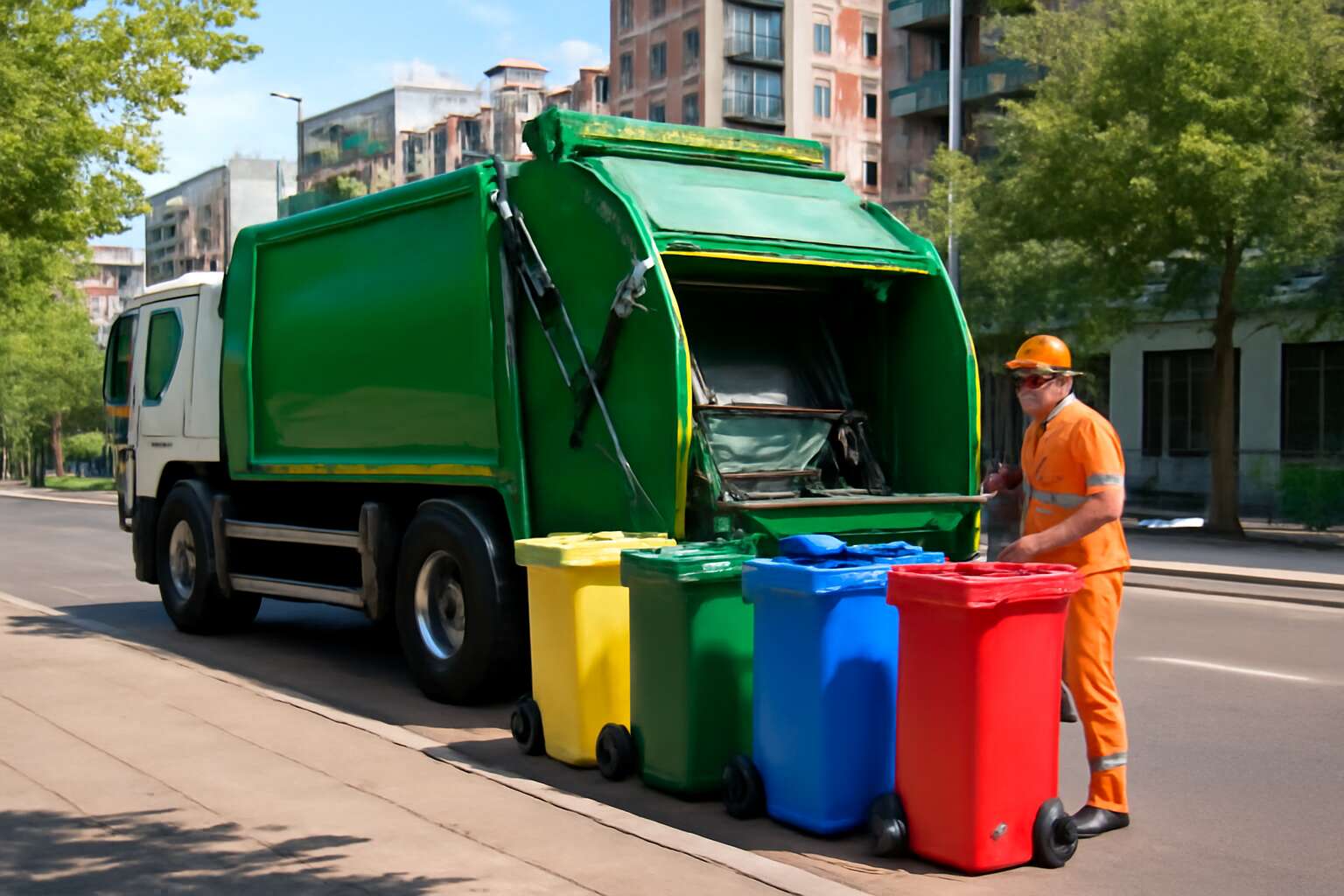
Overview of municipal waste management
Definition and scope of municipal waste
In the heart of every South African city, waste whispers at dawn. “Waste is a resource in the wrong form,” a planner once said, and that truth coils through the streets like a shadow. This is where waste management finds its purpose, turning entropy into order.
Municipal waste comprises the everyday refuse of households, small businesses, and public services, gathered by local authorities through a network of routes. It covers packaging, organics, paper, textiles, and street litter, plus the sweeps of public spaces. It does not include industrial byproducts or hazardous materials, which demand different handling. Efficient municipal waste removal relies on reliable collection schedules and sorted streams.
- Household waste
- Commercial and institutional waste
- Street sweepings and litter
In South Africa, councils are refining systems to improve recovery and minimize landfilling, a patient, meticulous dance of policy, engineering, and human resolve.
Key components of a city waste program
In South Africa’s city streets, waste isn’t just litter—it’s a stubborn partner in urban life. A memorable line still rings true: “Waste is a resource in the wrong form.” That truth fuels municipal waste removal, turning what crowds the curb into potential—compost, recycled feedstock, and cleaner neighborhoods.
Overview of the key components of a city waste program includes several moving parts that keep the system humming:
- Reliable collection routes and schedules
- Source separation and curbside recycling
- Sorting, composting, and material recovery facilities
- Waste-to-energy and residue treatment
- Data analytics, governance, and community engagement
South African councils are refining systems to minimize landfilling, a patient dance of policy, engineering, and people power. When these pieces align, the effort becomes a barometer of urban resilience—and a cleaner, smarter city for all.
Common waste streams and classifications
In the neon hush of city streets, waste breathes a stubborn life of its own. ‘Waste is a resource in the wrong form,’ the line that lingers on every curb and invites reform. It speaks to me. Municipal waste removal becomes the quiet architecture of urban resilience.
Overview of waste management reveals a tapestry of streams and classifications—each with a fate under South Africa’s councils. From organics to recyclables, the system sorts, diverts, and keeps streets legible to those who watch the curb.
- Organic waste: food scraps and yard debris
- Recyclables: paper, plastics, glass, metal
- Special and inert waste: hazardous items and e-waste
These streams feed the cycle of capture, conversion, and responsibility, a choreography shaped by policy, engineering, and community trust across our urban landscape. Municipal waste removal is the quiet architect of cleaner boulevards.
Benefits of efficient municipal waste management
In South Africa’s urban pulse, municipal waste removal acts as the invisible conductor of daily life. When streets stay tidy, the city breathes easier, and data suggest a 30% drop in roadside litter and related emissions—a quiet victory etched on curbs and commuters’ routines.
- Cleaner streets and improved public health
- Higher material recovery and recycling rates
- More efficient budgets and resource use
- Stronger community trust and local job opportunities
Together, these outcomes strengthen resilience, attract investment, and keep the urban fabric legible for residents and visitors alike.
Waste collection services and logistics
Residential collection routes and schedules
Smarter municipal waste removal can boost on-time pickups by up to 15%—and yes, your morning coffee will thank you. In South Africa, refining waste collection services and logistics means fewer missed pickups and cleaner streets. When residential collection routes and schedules are optimized, fuel bills shrink, delivering happier residents and quieter mornings.
Routes and schedules must respect density, traffic, and access realities. In practice, municipal teams balance curb appeal with practical constraints, using high-level tactics that keep everything moving without drama. Key considerations often emerge as high-level categories:
- Density-aware routing concepts that group similar neighborhoods
- Predictable collection windows to reduce street clutter
- Resident-facing communications that set expectations
Behind every curbside pickup is a network of depots, drivers, routes, and data that keeps the conveyor belt moving—quietly, efficiently, and safely. For South African municipalities, the payoff is measurable: cleaner neighborhoods, less litter, and stronger public trust in municipal waste removal.
Commercial and industrial waste collection
In South Africa’s bustling business districts, clean streets are the heartbeat of commerce. Efficient commercial and industrial waste collection can cut downtime and keep deliveries and production humming on schedule.
Key elements that keep the system turning include:
- Fleet and route optimization for high-volume sites
- Transparent scheduling and real-time visibility for managers
- Safe, compliant handling of recyclables and residuals
Behind the scenes, depots, drivers, routes, and data weave a reliable, quiet cycle. For municipal waste removal, this network must align with site access, safety rules, and regulatory reporting.
The payoff is tangible: cleaner facilities, safer sites, and a rhythm that supports growth.
Transfer stations and processing facilities
Transfer stations and processing facilities stand as quiet cathedrals of municipal waste removal. Here, fleets converge, unloading becomes choreography, and the day’s refuse is sorted, compacted, and redirected toward fate beyond the curb. The air hums with regulated precision, and a manager’s watchful eye turns chaos into cadence. I feel the pulse of the city in these rooms, where every load finds its rightful course. A city’s heartbeat runs on a stubborn truth: waste seeks order, and order answers.
Within these hubs, three currents guide the process:
- Unloading bays secured by safety protocols
- On-site sorting and compacting that sharpen haul efficiency
- Real-time tracking and regulatory reporting that keep everyone honest
In the theatre of waste, transfer stations and processing facilities keep the city breathing.
Technology in collection optimization
Across South Africa, efficient waste collection fleets log millions of kilometers weekly, turning chaos into cadence on every street. Waste collection services and logistics technology bend the day’s chore into a precise, reliable ritual—slashing delays, trimming fuel use, and boosting service integrity. This is how municipal waste removal keeps communities humming.
- Real-time GPS and telematics for live routing and rapid fault alerts
- Dynamic route optimization that weighs traffic, weigh points, and container fill levels
- Unified dashboards that connect with municipal reporting systems for compliance and transparency
By weaving sensors, software, and smart planning, crews move from curb to compactor with grace, turning every load into forward motion rather than a shuffle of miles.
Safety, compliance, and driver training
In the quiet pre-dawn hours, a well-trained driver turns risk into reliability, keeping municipal waste removal on track and neighborhoods humming. “Safety isn’t a checkbox; it’s a culture that guides every turn of the wheel,” says a veteran route supervisor.
Safety, compliance, and driver training are not afterthoughts—they are the backbone of lawful, efficient operations. The practice extends from pre-trip checks to on-road decision-making, ensuring every container is handled with care and every route respects lane discipline.
- Pre-trip checks and PPE compliance
- Defensive driving and fuel-conscious operation
- Fatigue management and shift planning
- Incident reporting and near-miss learning
- Regular refresher training aligned with municipal standards
Rigorous training reduces incident severity, minimizes downtime, and preserves public trust in municipal waste removal services.
Regulatory framework and sustainability goals
Local, state, and national regulations
Millions of tonnes of waste move through South African cities each year, and municipal waste removal is increasingly shaped by a precise regulatory choreography. Regulators demand safety, transparency, and sustainable results on every street, alley, and landfill—today!
- National Environmental Management Act (NEMA) and the Waste Act
- Integrated Waste Management Plans (IWMPs) at municipal level
- Local by-laws and provincial environmental regulations
These rules align with sustainability goals that push us toward a circular economy. The focus is the waste hierarchy—reduce, reuse, recycle, recover—while targeting lower landfill volumes and smarter energy recovery in municipal waste removal projects. Compliance shapes procurement, licensing, and reporting, guiding every contract to meet community health, environmental fairness, and long-term resilience.
Waste-to-energy and diversion targets
South Africa’s cities move millions of tonnes of waste each year, and the regulatory choreography behind municipal waste removal is precise and exacting. The National Environmental Management Act (NEMA) and the Waste Act set the stage, while Integrated Waste Management Plans (IWMPs) at municipal level translate policy into practice. Local by-laws and provincial environmental regulations add texture, ensuring safety, transparency, and sustainable results on every street.
These rules press toward a circular economy, guided by the waste hierarchy—reduce, reuse, recycle, recover—aiming to curb landfill volumes and lift energy recovery in municipal waste removal programs.
- Waste-to-energy initiatives that convert non-recyclable streams into power
- Diversion targets that channel organics and construction debris away from landfills
- Procurement and reporting frameworks that embed environmental fairness into contracts
Compliance shapes procurement, licensing, and reporting, aligning community health with long-term resilience in municipal waste removal.
Environmental impact and reporting standards
South Africa churns out millions of tonnes of municipal waste removal each year, and the regulatory framework stands as the gravity that keeps the system upright. The National Environmental Management Act (NEMA) and the Waste Act set the stage, with Integrated Waste Management Plans translating policy into practice at the municipal level. Local by-laws and provincial regulations add texture—safety, transparency, and accountability on every street—guiding waste away from chaos toward a cleaner, more resilient cityscape!
Environmental impact and reporting standards anchor this effort in real-world consequences.
- Transparent emissions and energy recovery metrics
- Third-party verification of diversion and recycling rates
- Public dashboards tracking waste removal performance
Fair procurement, licensing, and accountability emerge from this framework, turning policy into durable community health.
Partnering with waste removal providers and procurement
Selecting a municipal waste partner
Across South Africa’s cities, municipal waste removal partnerships move millions of tonnes of refuse each year, turning clutter into community resilience. When a city aligns its procurement rhythm with a trusted partner, waste management becomes less a box-ticking task and more a shared, forward-looking vision for every street.
In procurement conversations, several criteria guide the choice of a partner:
- Regulatory compliance and reputable accreditation within SA standards
- Flexible, scalable service levels to handle peak periods
- Transparent data sharing and clear performance reporting
- Commitment to local transformation, workforce development, and sustainability
When the right match is found, the alliance becomes a steady compass for public health and environmental ambitions across the city!
Contract models and pricing structures
In a city where streets shimmer with morning trade, the partner who handles municipal waste removal becomes an unseen cartographer, mapping routes of health and dignity. When procurement rhythm aligns with a trusted provider, waste management shifts from a box-ticking task into a shared, forward-looking vision for every street. The alliance breathes predictability and resilience into urban life, turning piles of refuse into pillars of public well-being!
Contract models and pricing structures can be crafted as a living framework—flexible yet firm enough to guide performance. I’ve watched teams align on value through transparent dialogue. Consider these elements for a balanced agreement:
- Fixed-price contracts with clearly defined scopes
- Time-and-materials with caps and milestones
- Performance-based pricing linked to KPIs and diversion targets
- Hybrid approaches blending predictability with adaptability
Transparency in data sharing and regular reporting unlocks trust, ensuring the partnership remains a steady compass for the city’s health and environmental ambitions.
Performance metrics and SLAs
Cities live or die by punctual pickups, and partnering with waste removal providers is less about signatures and more about choreography. In municipal waste removal, a trusted alliance turns discarded detritus into a shared, breathable timetable for the street.
For municipal waste removal, procurement should insist on clarity: SLAs that define service windows, response protocols, and containment standards. When KPIs align with city goals, the contract stops being a checkbox and becomes a collaborative forecast.
Consider these performance metrics to anchor accountability:
- On-time collection rate and route adherence
- Diversion targets and contamination controls
- Incident response time and repair continuity
- Regular data sharing and milestone-based reporting
With transparency in data sharing, the partnership remains a steady compass for public well-being and environmental ambition.
Implementation and transition planning
Streets are the heartbeat of a city. When municipal waste removal moves like a well-timed parade, dawn becomes brighter and citizens breathe easier. In South African cities, a trusted provider acts as a choreographer, turning discarded detritus into a living timetable that keeps traffic, parks, and sidewalks in harmony. When on-time collections exceed 95%, resident satisfaction rises and the city smiles back.
Procurement should demand clarity: SLAs that define service windows, containment standards, and clear escalation paths. A contract becomes a collaborative forecast when KPIs align with municipal goals, and transition planning transforms disruption into a controlled, graceful shift.
- Governance and data-sharing expectations
- Service windows and containment details
- Phased onboarding with pilots and neighborhood pretests
- Milestone-based reporting and continuous improvement alignment
With transparent data exchange, the partnership remains a steady compass for public well-being and environmental ambition in municipal waste removal across South Africa.
Vendor due diligence and risk management
Across South Africa, municipal waste removal is less about machines and more about trust. When procurement is rigorous, on-time collections rise toward 95%, and neighbourhoods breathe easier. “A dependable partner is a city’s quiet engine,” a strategist once noted.
Partnering with waste removal providers begins with vendor due diligence and risk management that reads like a cathedral ledger. We scrutinize financial stability, fleet reliability, safety records, and escalation paths, then demand transparent data controls and regulatory licenses to safeguard continuity.
Key criteria include:
- Licensing and insurance verification
- Fleet maintenance and reliability records
- Data security, transparency, and auditability
In a well-tuned partnership, governance and reporting become the compass for public well-being.
Governance and ongoing relationship management
Governance tightens the loop between city needs and vendor capability, turning risky sourcing into a measurable continuity. In mature partnerships, procurement governance becomes a living framework: clear escalation paths, predictable reporting cycles, and shared data controls that survive leadership churn. The aim is continuity—ensuring municipal waste removal remains on schedule even as markets shift.
- Regular performance reviews tied to SLAs and city outcomes
- Transparent data governance, audit trails, and incident response
- Independent risk monitoring and escalation governance for both parties
Beyond contracts, the ongoing relationship rests on trust built through quarterly forums, joint risk assessments, and a bias toward proactive communication. A well-governed program converts risk into resilience, turning everyday collections into a civic habit that residents can feel in their neighbourhoods.
0 Comments