
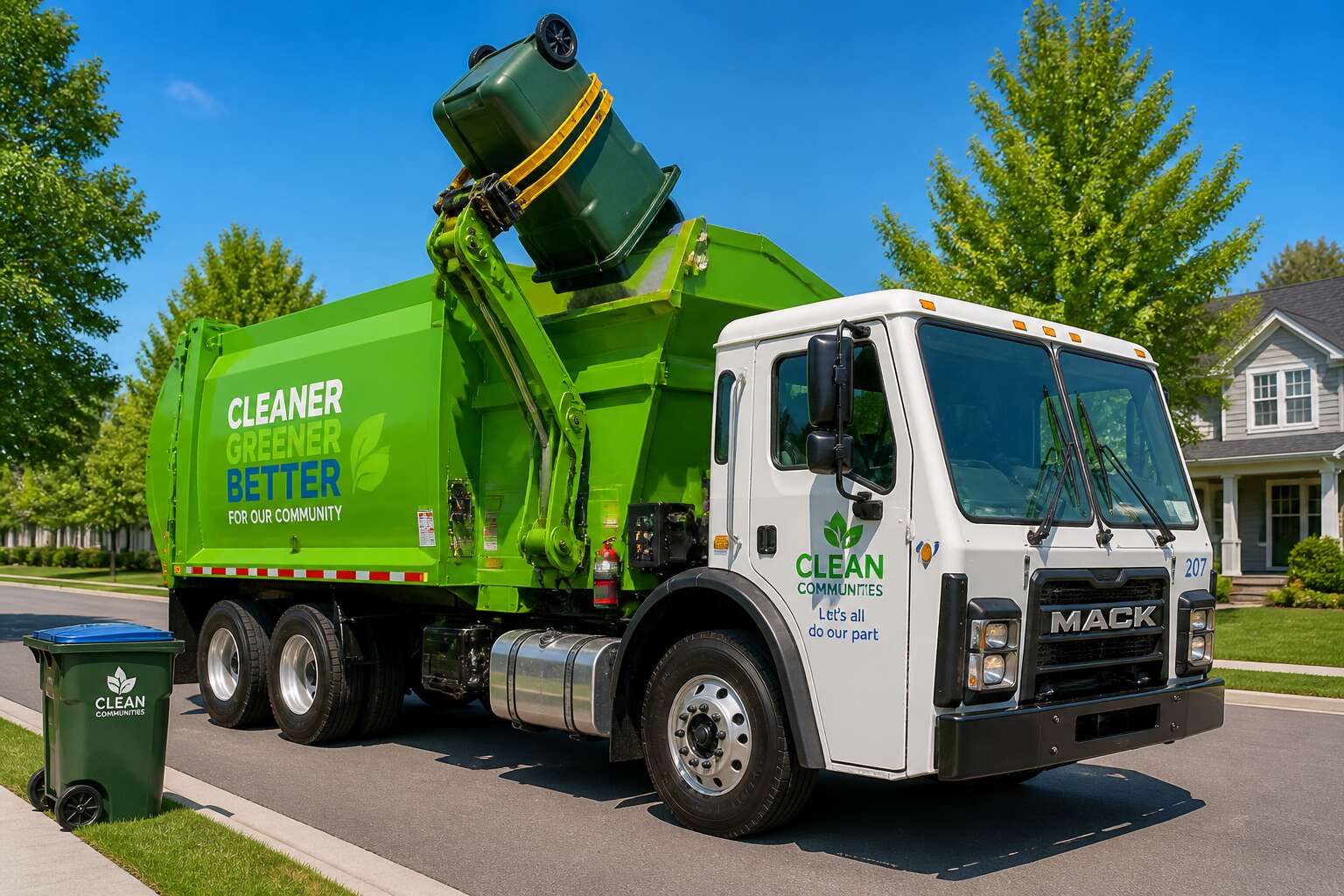
Types of Refuse Collection Vehicles
Rear Loader vs. Side Loader Configurations
The ballet of suburban pickup has its own etiquette, and the vehicle that performs this choreography is the unsung hero of the curb. Observing a rear loader at work is to watch a performance rooted in tradition. It demands at least two operatives, one to wrestle the bin and another to work the controls, a ritual that feels almost ceremonial. This configuration, however, is a costly pas de deux regarding labour. For many private hauliers, the operational expense of this traditional waste removal truck can be substantial.
The side loader, in contrast, offers a more solitary and efficient experience. It is the modern equivalent of a solo violinist, capable of performing the entire concerto from the safety of the cab. This single-operator design is frequently lauded for its speed and the reduced risk of strain-related injuries. For contractors managing suburban routes where time is money, the automated arm of a side loader is a compelling argument. It also tends to be the preferred choice for new municipal contracts, where the efficiency of the waste removal truck is measured against rising fuel costs and the constant pressure to lower the cost per ton.
Front Loader Trucks for Commercial Dumpsters
In the commercial heart of our cities, where glass towers scrape the sky and retail empires churn, a different kind of waste removal truck takes command. This is the front loader, a machine built for the monumental task of taming the commercial dumpster. It approaches its charge head-on, extending two robust forks to cradle a massive bin before hoisting it high over the cab, emptying its contents into a waiting cavern. This transaction is pure efficiency, a mechanical handshake between truck and receptacle.
The choreography here is devoid of human strain. A single operator can manage a front loader from the climate-controlled cab, meaning one driver can service dozens of business premises in a single shift. For shopping centres and industrial parks, this speed is not just a convenience; it is a necessity. The hydraulic systems are designed for heavy, punishing work, handling refuse that would break the spirit of a residential unit. In the South African context, where urban density and commercial activity are growing, this configuration offers specific advantages:
– It minimises labour costs by removing the need for a manual crew.
– It provides a swift turnaround, reducing vehicle downtime at each stop.
– It keeps operators safer by keeping them away from moving truck parts and infectious waste.
The front loader is not merely a larger version of its residential cousins; it is a specialised tool. Its elevated pivot points and reinforced arms allow it to deal with the dense, compacted waste that a busy restaurant or office block generates. When you see one of these waste removal truck units navigating a loading dock, you are looking at the silent engine of our commercial sanitation, ensuring the glitter of the shopfront is not betrayed by the grime behind it.
Automated Arm Systems for Residential Routes
At 6:30 on a Tuesday morning, the suburban kerb is a busy place. A waste removal truck approaches with a robotic arm that reaches out, grips a wheelie bin, and empties it in a few seconds. The driver never leaves the cab.
Automated arm systems rely on precise positioning. The bin must face the road with its handle towards the vehicle. It must stand clear of walls, cars, and overhanging branches. These are rules residents learn through trial and error.
- Place bins at least a metre from obstructions.
- Close lids firmly to prevent spillage.
- Keep the handle unobstructed for the gripper.
For South African municipalities, this technology cuts labour costs and speeds up collection routes. It also shifts responsibility onto the household, making bin placement a civic duty.
Specialized Compact Units for Narrow Streets
In the dense arteries of South Africa’s older towns, where streets were laid before the motorcar, the standard waste removal truck is a titan too large for the job. The narrow lanes of Bo-Kaap or the cobbled passages of St Andrews in KwaZulu-Natal present a daily challenge for sanitation departments. A full-scale rear loader cannot navigate these tight corners without risking damage to parked vehicles or historic facades. The solution arrives in the form of specialized compact units, built for a different kind of grit.
These mini refuse collectors utilise a short wheelbase and a tight turning radius to access service alleys and cul-de-sacs where larger rigs dare not go. The cab is often a modified light commercial vehicle chassis, fitted with a small, high-tipping hopper. For the driver, this is a different skill set. It demands the spatial awareness of a bus operator and the caution of a cyclist, navigating blind corners where a pedestrian might appear at any moment. The trade-off for this agility is a sacrifice in volume. A compact unit will make several trips to the transfer station, but it ensures no street is left unserved.
Municipalities often pair these small trucks with a satellite collection point, where larger vehicles transfer the waste away. This process, known as a shuttle system, maintains efficiency without forcing the city to widen historic streets.
Key characteristics of these compact units include:
– A gross vehicle mass typically under 10 tonnes.
– Reduced bin capacities, often below 6 cubic metres.
– A cab-over design to maximise visibility.
– Automated or manual lifting gear suited to space-constrained environments.
This machinery offers a quiet dignity to the urban landscape. It performs the essential work of the city without demanding that the fabric of a neighbourhood be rebuilt to accommodate it. For the residents, the arrival of this smaller truck means their narrow street is not forgotten. Their waste removal truck is specifically tailored to the reality of their environment, proving that utility can adapt to heritage.
Key Components and Modern Technology
Hydraulic Compaction Systems Explained
Every day, a single waste removal truck in Durban compacts up to 12 tonnes of refuse before reaching the landfill. I have watched hydraulic rams crush a week’s worth of household waste into a block the size of a coffee table. The system operates through pumps, valves, and a pressurised fluid reservoir. Without these, the vehicle is simply a box on wheels.
Key components include:
- Main hydraulic pump, which generates flow
- Control valves that direct pressure to specific cylinders
- A compaction blade that slides and pivots repeatedly
Modern technology adds load sensors that adjust force automatically. The blade detects resistance and pauses when it hits a hard object, preventing damage. This precision allows a waste removal truck to pack tighter loads, reducing trips and fuel usage. Hydraulic fluid also runs cooler thanks to newer heat exchangers, extending component life and keeping operations consistent even on long routes.
Route Optimization Software for Collection Fleets
Route planning used to be a guessing game. Not anymore. Telematics now pinpoints every vehicle’s position, engine status, and compaction cycles in real time. A waste removal truck travelling through the Berea or Umhlanga sends constant data, allowing dispatchers to reroute around traffic incidents in seconds. This software does not just draw lines on a map. It analyses historical trends, road conditions, and even gate times at the Umhlanga landfill.
Dynamic route planning adjusts on the fly. If a bin sensor reports a low fill level, the software rearranges stops. The system prioritises high-yield routes, saving fuel and driver hours. For a fleet manager, this means less wear on brakes and suspension. The result is a collection fleet that avoids deadhead miles entirely.
The software also manages crew schedules with precision. It knows when a driver is due for a break and when a route takes longer than expected. It flags discrepancies immediately. This level of control reduces overtime costs and prevents customer complaints about missed collections. The waste removal truck becomes part of a cohesive system, not an isolated asset.
One specific feature stands out: predictive fill modelling. The software uses historical data to forecast exactly when a bin will reach capacity. It schedules the collection for the day before overflow occurs. This insight eliminates unnecessary visits. It also ensures that no bin remains unserved for too long. In Durban’s humid climate, that is a crucial detail.
Telematics and GPS Tracking Integration
One GPS unit can reduce a fleet’s fuel consumption by 12% within the first month. That is the kind of payoff found in telematics and GPS tracking integration. No longer does a waste removal truck operate in obscurity.
The key components start with a hardened receiver that locks onto satellite signals even under Durban’s dense tree cover. A cellular modem relays data every few seconds. An accelerometer detects when the bin arm engages or when the compactor cycles.
Consider what the system reveals:
- Precise vehicle location on any route
- Engine temperature and hydraulic pressure readings
- Exact times for each stop and departure
- Alerts for unauthorised overnight movement
This data becomes a living record. A waste removal truck in Cape Town can tell you its speed, its idling minutes, and its compactor load history without a single human touch!
Weight Sensors and Load Monitoring
Weight sensors and load monitoring have changed how operators view each collection. A single overloaded axle can incur fines that erase a day’s revenue, while underloaded vehicles burn fuel without purpose. Modern strain gauge load cells, mounted on lift arms and chassis, measure force directly and transmit data to the cab. This turns the waste removal truck into a precise weighing instrument.
The load monitoring system records the mass of every bin as it tips, compares it with historical data, and alerts the driver to irregularities. The cabin display shows live payload figures, which shape decisions on the route. Typical measurements include:
- Individual bin weights for accurate customer billing
- Axle load distribution to avoid legal penalties
- Total payload to plan transfer station visits
These components tolerate dust, rain, and constant vibration. They provide dependable data that converts guesswork into certainty. With this technology, the waste removal truck delivers accountability for every kilogram lifted, making each route safer and more profitable.
Safety Camera Systems and Blind Spot Detection
Over 60% of waste removal truck collisions occur while reversing or changing lanes. A driver cannot see everything. The blind spots around a heavy vehicle are zones of pure guesswork unless technology fills the gaps. Camera systems and sensor arrays now provide the missing eyes. This is core safety equipment, not an optional extra.
- Side blind spots that hide cyclists and pedestrians
- The area directly behind the tailgate where the operator works
- The space alongside the cab during tight manoeuvres
Modern trucks combine wide-angle cameras with radar detections. The cabin monitor shows a live feed that reacts to movement. If a person moves into a blind spot, audio alarms trigger. The driver gets a warning before the wheels turn. It is a simple system with a powerful effect. These tools reduce incident risk and driver stress. For a waste removal truck, visibility is a direct line to safer streets. Every reversing alarm, every side sensor, and every overhead camera works to close the gaps that cause costly claims.
Operational Efficiency and Route Planning
Designing Optimal Pickup Schedules
In Johannesburg, a waste removal truck sitting in traffic costs R800 an hour in fuel and wages. That is the real price of a poorly timed pickup schedule.
Operational efficiency starts with understanding your collection area. Different suburbs generate waste at different rates. Industrial zones peak midweek, while residential areas surge after weekends. Designing optimal pickup schedules means mapping those patterns against traffic flows and crew availability.
- Schedule industrial routes for Tuesday and Thursday mornings
- Reserve Monday for high volume residential zones
- Align school area pickups with afternoon quiet hours
Each adjustment reduces idle time and prevents overflows. A waste removal truck that follows a precise schedule covers more stops per hour and burns less diesel. That translates directly to lower operating costs and fewer missed bins!
Crew Safety Protocols and Load Limits
A waste removal truck carries two essential constraints: time and weight. Route planning must respect both, because overweight bins damage hydraulics and underloaded runs burn diesel for no gain. Every vehicle has a chassis rating, and operators should verify axle weights before departure.
- Maintain three point contact when mounting the cab.
- Confirm clearances from pedestrians before lifting.
- Never approach the compaction chamber during operation.
Crew safety protocols protect the hands and limbs that serve the route. Workers need clear hand signals and designated standing zones. Proximity sensors assist, but human vigilance remains necessary. Load limits also shape the route itself, and each waste removal truck carries a specific rated capacity. Never compromise a compacted load for an extra stop, since the short term gain becomes a breakdown. Steady adherence to ratings keeps crews safe and schedules intact.
Dealing with Bulk Items and Recycling Streams
Bulk items demand attention on any route. A couch left roadside or a heap of builder’s rubble can stall a crew for twenty minutes. Every waste removal truck must be dispatched with volume in mind, not just stop counts. Recycling streams add another layer. Glass, paper, and plastic each require separate compartments or dedicated collection days.
Efficient routes handle oversize loads through scheduled call-ins. Crews report the find ahead of time, and the planner adjusts the sequence before the waste removal truck leaves the depot.
Recycling routes need their own logic:
- satellite vehicles meeting the main truck at transfer points
- alternating weekly collections for mixed recyclables versus general refuse
- dedicated crews for high-density commercial zones
Separating streams at the source reduces sorting time at the depot. Route planning becomes a balance between truck capacity and the unpredictability of what residents discard.
Weather-Related Challenges and Mitigation
A single thunderstorm can add six hours to a municipal route. When a cold front sweeps across the Cape, wind speeds can exceed 70 km/h, making rear loader lifts dangerous. A waste removal truck might need to skip certain streets entirely to protect the crew and the public.
- Monitor real time radar feeds before each dispatch sequence
- Place grit or sand at known steep gradient stops
- Coordinate with municipal disaster units for rapid response
Mitigation starts with data. Route planning software now includes rainfall and temperature layers, which allow planners to shift collection days when conditions turn violent. For coastal towns, salt spray corrodes compactor linkages, so crews apply protective coatings ahead of storm seasons.
Communication Strategies with Dispatch Teams
Every route begins as a conversation. Dispatchers and drivers on a waste removal truck share a mental model of the streets, the traffic, and the hidden bottlenecks. When that model breaks, collection times stretch and fuel burns away. The best teams I have worked with treat the radio channel as a live document, not a complaint line.
They use structured check-ins at landmarks. They log deviations immediately. A driver who spots a closed gate or a parked sedan blocking a bin lift calls it in before reversing. Dispatch adjusts the sequence, not just the schedule.
- Confirm daily route changes before the first lift.
- Use geotagged voice notes for tricky access points.
- Escalate recurring blockages to planning teams weekly.
This feedback loop turns a waste removal truck into a data source for the whole city. Route plans become more accurate after each shift, refined by the people who handle the roads directly.
Fuel Efficiency Practices for Heavy Duty Vehicles
In many fleets, fuel is the second largest cost after labour, often consuming a fifth of the operating budget. A waste removal truck that idles for an extra hour each day can burn through 15 litres of diesel without moving an inch. Route planning becomes an exercise in physics as much as logistics. Every stop forces a full stop, a compression cycle, and a reacceleration. Those three moments define the difference between a profitable shift and a costly one.
The terrain of the Western Cape or Gauteng adds another layer. A route that looks efficient on a flat map can punish a driver with steep gradients and stop start traffic. Fuel efficiency for heavy duty vehicles relies on anticipating these changes. I have ridden along with operators who coast into a declination, using the truck’s momentum instead of the throttle. They plan their braking points at intersections, preserving kinetic energy for the next pull away. It is a quiet skill, but it saves thousands of rand per month.
Another practice is the reduction of left turns, a strategy borrowed from package delivery fleets. Left turns across oncoming traffic force a waste removal truck to wait, often idling for minutes. Right turns keep the vehicle moving with the flow. Route designers now favour clockwise loops, cutting both fuel consumption and the risk of collisions. This approach does not lengthen the route; it simply reorganises the sequence to favour momentum.
Matching the vehicle to the task is equally critical. A heavy compaction unit on a narrow suburban lane burns fuel carrying unnecessary weight. A lighter truck, purpose built for that route, uses less energy per kilometre. The chassis, the bin size, and the tyre pressure all contribute to rolling resistance. Properly inflated tyres can improve fuel economy by nearly three percent.
– Monitor idling time on each collection route
– Use progressive shifting, keeping the engine in its optimal rpm band
– Schedule maintenance for air filters and fuel injectors regularly
– Train drivers on eco driving techniques every six months
The cumulative effect of these practices is unglamorous but undeniable. A fleet that plans for fuel efficiency does not just save money. It extends the life of the vehicle, reduces downtime, and lowers emissions. The waste removal truck becomes a more reliable asset, one that returns to the depot with less wear and a smaller carbon footprint. Consistency in these habits, not dramatic overhauls, produces the long term gains.
Environmental Regulations and Emissions Standards
Understanding EPA Diesel Emission Rules
Diesel engines have long been the workhorse of the sanitation industry, but they also sit squarely in the crosshairs of modern emission rules. The EPA diesel emission regulations, while American in origin, influence global manufacturing standards that South African fleets adopt. Understanding these rules is no longer optional for anyone running a waste removal truck.
The heart of the matter lies in engine combustion technology. Older units produce higher levels of particulate matter and nitrogen oxides. Newer models rely on systems that clean exhaust before it leaves the pipe. For a waste removal truck, this means more than just a filter swap. It changes how mechanics service the vehicle and how drivers handle daily routes.
Key regulatory components include:
- Diesel particulate filters that capture soot and burn it off
- Exhaust gas recirculation to lower combustion temperatures
- Selective catalytic reduction using diesel exhaust fluid
I have watched operators grumble about the added maintenance. Yet the cleaner air around schools and market squares tells a different story. These rules reshape the cost of running a waste removal truck, but they also build trust with the communities we serve. That trade is worth making.
Transitioning to Electric and Hybrid Powertrains
The shift from diesel to electric and hybrid powertrains is arriving through municipal tenders and private contracts that now specify lower emission equipment. A waste removal truck running on battery power changes the economics of collection. Energy costs drop, while charging infrastructure and route range demand new planning. Hybrid units provide a middle option, using diesel for heavy compaction and electric drive for residential streets at dawn.
The maintenance profile shifts as well. Fewer moving parts in an electric drivetrain mean less wear, but battery health becomes the new service priority. Operators must weigh:
- Initial capital against long term fuel savings
- Charging availability at depots against route distances
- Crew training for regenerative braking and silent operation
These considerations reshape fleet strategy. The quiet approach of an electric waste removal truck through a suburban street shows that the industry is changing.
Noise Ordinance Compliance for Early Morning Routes
A waste removal truck grinding through a suburb at 4:30 AM can hit 85 decibels. That rivals a busy highway. Many South African municipalities now enforce noise limits around 60 to 70 decibels during early morning hours. Operators in Johannesburg and Pretoria have already received fines for hydraulic whine and reverse alarms.
Emission standards tighten on a separate track. The City of Cape Town’s air quality bylaw demands smoke opacity checks for older diesel fleets. A poorly tuned engine fails both the visual test and the acoustic one. Compliance requires attention to muffler condition, tailpipe seals, and exhaust backpressure. Noise ordinance compliance also means adjusting collection windows to align with legal hours, not just route convenience.
- Replace worn compaction rams that bang at full extension
- Install silencers on pneumatic ejector blades
- Program lift arms to slow near pickup points
These small changes keep a waste removal truck within legal limits while maintaining pickup schedules.
Landfill Diversion Goals and Collection Impact
Some Western Cape landfill sites have less than a decade of airspace left. That statistic drives today’s waste removal truck design and daily collection planning. Provincial regulations demand separate collection of garden waste and food waste, so a vehicle empties two compartments at different drop-off sites and burns more time per stop.
Emissions standards intersect with this pressure. Older fleets struggle to meet municipal air quality limits and the higher fuel burn of multi-stop routes. A waste removal truck idling while a loader sorts recyclables is a risk on both fronts.
- Monitor hydraulic pump pressure at partial loads
- Balance axle weights when compartments are uneven
- Schedule maintenance around scrubber regeneration cycles
These operational details determine whether collection targets remain feasible. Cape Town’s goal of halving organic waste to landfill depends on equipment that handles separation at the kerbside. Municipalities now audit route data, linking diversion rates to each waste removal truck’s performance.
Maintenance Schedules and Cost Management
Preventative Maintenance Checklists for Hydraulics
In waste collection, a single hydraulic leak can halt an entire route before sunrise. The pump, cylinders, and hoses on a waste removal truck endure constant pressure, abrasive dust, and temperature swings. Preventative maintenance checklists turn reactive repairs into planned events. A structured schedule reduces downtime and protects your budget.
- Inspect hoses and fittings for cracks or weepage weekly
- Test hydraulic fluid levels and contamination before each shift
- Torque cylinder mounting bolts to spec every 500 hours
Cost management depends on catching small issues early. Filter changes and fluid analysis cost far less than replacing a failed pump. Track every inspection and repair for each waste removal truck to spot patterns. The data reveals which components fail on your specific routes and loads, allowing you to adjust intervals.
Tire Wear Patterns and Replacement Intervals
Approximately 10% of a waste removal truck’s operating budget disappears through tyre wear. Scrub patterns tell a story. Shoulder wear indicates underinflation, while centre wear signals overinflation. Cupping on the drive axle points to worn suspension bushings, which no amount of tyre rotation will fix.
A maintenance schedule should include a monthly tread depth reading and a sidewall inspection. Replacement intervals depend on load, route surface, and driver behaviour. Rear axle tyres on a side loader often wear twice as fast as the steering axle set.
– Measure tread depth at three points across each tyre
– Rotate steering tyres to the drive position at 40,000 km
– Replace pairs, never singles, to prevent axle scrub
Cost management means logging every tyre’s removal mileage. The data reveals routes that punish rubber most. A waste removal truck running mountainous KwaZulu-Natal routes needs different intervals than one working flat municipal streets. Track the kilometres, trace the pattern, adjust.
Extending Vehicle Lifespan Through Proper Lubrication
Few things age a waste removal truck faster than neglected lubrication points. Grease costs a fraction of a new bearing, yet many fleets skip the schedule. Our workshop logs every stroke of the grease gun, because one missed zerk can lead to a R12,000 differential repair.
- Engine oil analysis for wear metals
- Chassis grease for steering linkages
- Hydraulic fluid checks for the compaction system
Follow manufacturer intervals, but adapt for local dust. South African routes push grit into every joint. A monthly schedule should include the above, and we reduced unplanned breakdowns by 30% after auditing each lubrication point. That is cost management extending vehicle lifespan.
Budgeting for Repairs and Unexpected Downtime
One unplanned breakdown can erase a month of savings. Our maintenance schedule is not a suggestion; it is a contract with the balance sheet. We allocate 12% of operating budget to repairs, but the real cost lies in idle hours.
A typical waste removal truck loses R2,400 per day when parked. We track this by pairing scheduled services with contingency funds. For example, we set aside reserves for hydraulic failures and brake overhauls.
- Audit repair costs quarterly
- Compare warranty claims against workshop data
Forecasting requires honesty. Unexpected downtime happens, but a disciplined schedule shrinks its frequency.
Leasing vs. Purchasing Options for Municipalities
Municipalities face a choice between leasing and purchasing a waste removal truck. Leasing converts capital costs into predictable monthly payments. Purchasing builds equity but burdens the workshop with full repair liability. The correct answer depends on route distances, fleet age, and available cash reserves.
South African municipalities must weigh the rand value of stranded capital. A new lease includes the latest compliance standards. Owning older units means more scheduled maintenance, but no rental escalation clauses.
- Leasing: lower upfront outlay, fixed terms, easier warranty claims.
- Purchasing: long term control, resale value, but full repair liability.
Track idle hours against each option. A waste removal truck parked for repairs costs R2,400 daily, regardless of who owns it.
Resale Value and Fleet Upgradation Strategies
Every waste removal truck carries a resale value that depreciates from day one. Maintenance schedules do more than prevent breakdowns; they preserve the vehicle’s future market value. A workshop that logs oil analysis, hydraulic pressures, and compaction cycle counts creates a documented history that buyers trust. That documentation transforms resale from a guess into a calculation.
Fleet upgradation strategies follow the data, not the calendar! When unscheduled repairs exceed 15% of a truck’s annual operating cost, replacement becomes cheaper than retention. Cost per kilometre against vehicle age reveals when a unit becomes a liability. A phased replacement plan avoids the panic of buying several units in one budget year.
Common upgrade triggers include:
- Chassis corrosion threatening structural integrity
- Repeated hydraulic pump failures despite proper service
- Compliance changes that make the body illegal to operate
Resale value improves when you maintain the body configuration of a waste removal truck and avoid substandard parts.



0 Comments