
Understanding Rubble Removal Midstream
What Does Midstream Mean in Rubble Removal
In the flow of any demolition project, the term midstream refers to the phase between initial clearance and final disposal. Rubble removal midstream is the logistical heart of the operation, where debris is sorted, loaded, and transported away from the site. This stage often determines whether a project stays on schedule or stalls entirely.
Consider what happens during this phase:
– Bulk waste is separated by material type
– Heavy loads are weighed and documented
– Transport routes are coordinated with municipal regulations
Each step requires careful planning. Without a steady rhythm here, the entire build sequence falters. Understanding rubble removal midstream helps property owners in Johannesburg and Pretoria anticipate costs and timelines accurately.
The Role of Midstream in the Debris Management Cycle
Rubble removal midstream plays a specific role in the debris management cycle. It sits between demolition and final disposal, serving as the connection between those two stages. Property owners in Johannesburg and Pretoria often overlook this part of the process, yet it demands the most coordination.
I have watched sites where a sluggish midstream phase turned a straightforward teardown into a weeks-long ordeal. The cycle depends on rhythm. When rubble removal midstream falters, the sequence backs up and every subsequent trade waits. The demolition crew moves on, but the debris remains.
Consider what the cycle demands:
- Demolition produces the material
- Midstream processes and moves it
- Disposal ends the chain
Each link depends on the one before it. A contractor who understands this sequence can spot problems before they become delays!
Common Types of Rubble Involved
A skip full of broken brick differs from one full of mixed demolition waste, and that difference determines how the midstream process unfolds. Rubble removal midstream crews in Johannesburg and Pretoria read these loads daily. Concrete gets crushed or diverted to aggregate recyclers. Intact brick can be cleaned and resold. Rebar requires magnetic separation before it moves onward.
- Concrete and masonry account for the largest volume
- Timber and gypsum board add combustible complications
- Excavated soil and foundation rubble need screening
Timber and gypsum board from interior strip-outs complicate the sorting process because they cannot go to the same recyclers. I have watched skips get contaminated when nobody separates the rebar from the brick. That mistake turns reusable material into landfill, and the entire cycle slows down. Correct classification during this phase prevents the failure.
Industries That Rely on Midstream Rubble Removal
Construction and demolition waste forms roughly a quarter of the debris entering Gauteng’s landfills, and the midstream phase decides which portion returns to use. Rubble removal midstream supports several sectors. Demolition contractors require skips to be cleared quickly so site access remains open. Renovation specialists depend on careful sorting to preserve timber and fixtures for resale. Aggregate recyclers expect inbound concrete to be free of rebar, and property developers face penalties when the midstream phase falls behind schedule. I have watched a single contaminated load stall an entire week’s workflow!
The industries relying on this phase include:
- Demolition firms clearing commercial and residential structures
- Waste management operators coordinating skip logistics across Johannesburg and Pretoria
- Recycling plants that crush concrete and recover ferrous metals
Without this midstream coordination, each crew ends up working against the next.
Key Processes and Equipment
On-Site Sorting and Segregation Techniques
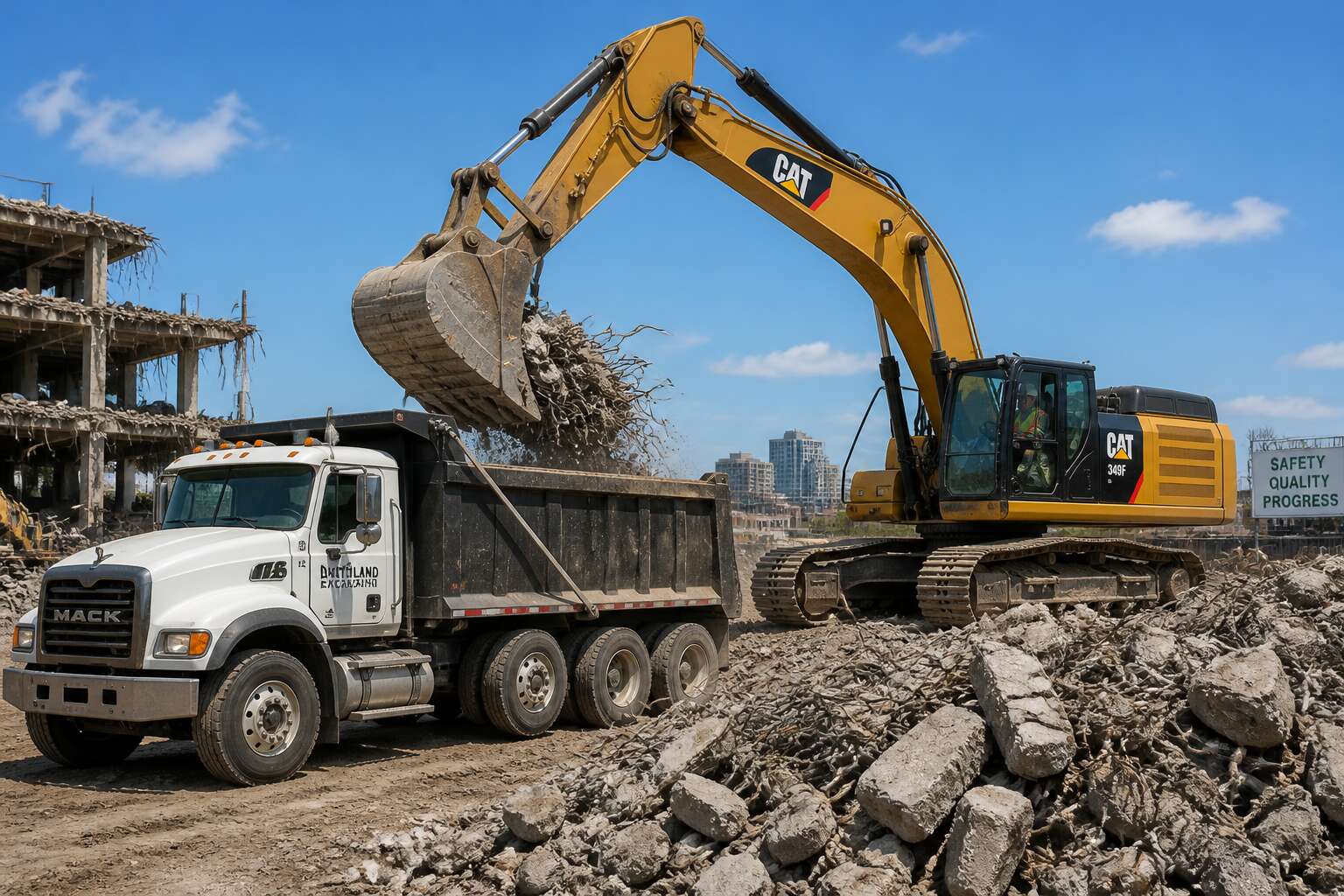
On a rubble removal midstream site, sorting begins before a single truck leaves the property. Excavators with pulveriser attachments break down concrete slabs, while grapples separate rebar from masonry. This initial rough separation determines how efficiently the rest of the operation runs.
Mobile screening plants then take over, shaking material through different mesh sizes to create uniform fractions. Magnetic separators pull out ferrous metals, and manual picking stations catch anything the machines miss. Each load leaving the site should contain one material type, making downstream recycling far easier.
Key techniques include:
– Source separation, where different rubble types stay apart from the moment they are excavated
– Size classification through vibrating screens
– Density separation using air classifiers or water settling
Working this way cuts transport costs and reduces mixed waste heading to landfill. For South African contractors facing rising tipping fees, that makes rubble removal midstream a financially sound choice.
Loading and Transportation Logistics
Loading and transportation logistics decide whether a rubble removal midstream operation runs profitably or burns diesel for nothing. Excavators with clamshell buckets load trucks in precise cycles, while weighbridges capture each vehicle’s tare and gross mass. This data matters, because South African landfills and recyclers charge by the ton.
The fleet must match the site. Articulated dump trucks handle muddy terrain, while rigid tipper trucks suit long highway runs to crushing plants in Johannesburg or Durban. Every load needs proper covering, especially on the N3 or N1, where dust fines and loose debris attract enforcement attention.
Well coordinated loading cycles keep the chain moving. Idle trucks cost money, and empty return trips double the damage. Here is what smooth rubble removal midstream transport relies on:
- Load securing systems that comply with provincial road regulations
- GPS tracking on every vehicle to monitor turnaround times
- Wheel wash stations to keep public roads clean
Crushing and Recycling Equipment Used Midstream
Rubble removal midstream stops being a haulage problem the moment a jaw crusher swallows its first slab. These machines reduce demolished concrete to 50mm aggregate on site, at which point the material gains resale value. South African operators favour mobile crushers because they move between jobs without permanent plant permits, and they handle the rebar-laced debris that stationary units reject.
Magnetic separators pull steel out before it reaches the screens. Vibrating screens grade material into sizes for road base or concrete aggregate, while stackers build stockpiles that loading trucks can access without reversing.
Consider the supporting equipment that keeps this chain honest:
- Overbelt magnets to strip wire mesh from the feed
- Diesel hydraulic crushers for off grid sites
- Fines conveyors to manage dust before it becomes a formal complaint
Rubble removal midstream operators who run this equipment produce a sellable aggregate instead of a disposal liability.
Managing Hazardous Materials During Removal
Section 24 of the National Building Regulations requires an asbestos survey before most demolition work begins. One missed contaminant can turn an entire stockpile of crushed aggregate into hazardous waste.
Before any midstream processing begins, hazardous materials must be identified and isolated. Rubble removal midstream operators rely on visual surveys, laboratory testing, and handheld XRF analysers to detect lead paint and heavy metals. Contaminated material never enters the crusher. It moves to lined skips and licensed disposal sites.
Key equipment in this phase includes:
- Negative pressure dust suppression units
- HEPA filtered extraction vacuums
- Chemical encapsulants for asbestos fibres
- Air monitoring sensors on site boundaries
These controls protect workers and keep the downstream product clean. A single missed sack of asbestos dust can stall an entire project. Rubble removal midstream depends on mandatory contaminant screening, and reputable contractors build that step into every tender.
Best Practices for Efficient Rubble Handling
Efficiency in rubble removal midstream depends on how well each machine matches the next. A jaw crusher with too little feed wastes fuel, while an overfed screen blinds and stalls. Operators who monitor throughput in real time adjust conveyor speeds before bottlenecks form.
Gains come from matching equipment to material. Reinforced steel frames handle reinforced concrete, but mobile impactors suit mixed brick and tile. Wear parts need scheduled inspection, not emergency replacement. One hour of preventative maintenance saves a full shift of downtime. I have watched that trade pay off.
- Check magnet separators daily for trapped rebar
- Calibrate screen decks before every shift change
- Monitor dust extraction filters before they clog
Dust extraction and water suppression also protect crew visibility and bearing life. That consistency separates profitable rubble removal midstream operations from the rest. It requires discipline, but the payoff shows in every clean load that leaves the site.
Cost Factors and Pricing Strategies
Volume and Weight-Based Pricing Models
Pricing a rubble removal midstream operation in South Africa varies with the material’s density and the distance to a disposal site.
Most companies use a volume based model for loose building waste, charging per cubic metre. That suits plasterboard or broken bricks. For foundation rubble or reinforced concrete, weight based pricing takes over, since a single skip can exceed legal load limits.
- Fuel and maintenance per kilometre
- Tipping fees at registered landfills
- Time spent on congestion in urban centres
- Cleanliness of the material, which affects recycling value
Rubble removal midstream quotes often combine both models, with a base rate for collection and a variable rate per tonne or per m³. This transparency helps contractors budget across multiple sites.
Understanding these cost factors allows you to compare quotes without surprises, especially when hazardous contamination forces special handling.
Distance and Disposal Fees Impact
The distance between a demolition site and the nearest licensed landfill often determines the bottom line more than the volume of rubble. In Gauteng, a haul of 20 kilometres versus 60 kilometres can shift the quote by nearly a third. Disposal fees at registered facilities in South Africa are not uniform; they vary by municipality, by waste classification, and by the landfill’s remaining airspace. This unpredictability forces rubble removal midstream operators to build buffers into their pricing.
A typical cost breakdown might look like this:
- Haulage charge per kilometre, adjusted for return trips
- Disposal tariff per tonne at the receiving landfill
- Waiting time at weighbridges, especially during peak hours
Each variable compounds. A longer route increases fuel burn and driver fatigue, while a landfill with higher gate fees inflates the per-load cost. I have seen quotes swing wildly because a landfill changed its gate tariff mid-contract. For the contractor, the real challenge is that these costs are rarely stable. Rubble removal midstream pricing must therefore account for both the physical distance and the administrative burden of navigating different municipal disposal rules.
Labor and Equipment Costs
Labor drives most rubble removal midstream budgets. A single crew requires a driver, a loader operator, and at least one ground worker to manage debris on site. In Gauteng, artisan wages have climbed steadily, and overtime during peak construction seasons inflates payroll.
Equipment costs behave the same way. A tipper truck’s maintenance schedule, tyre replacement, and diesel consumption all factor into the hourly rate. Loaders and excavators demand regular servicing, and every idle machine still costs money. Operators in the rubble removal midstream sector often quote on a per-load basis, but the real cost sits in machine hours.
- Hourly rates for rollback trucks and TLBs
- Operator wages, including bonuses and overtime
- Preventative maintenance and unscheduled repairs
Site managers track these figures daily, not monthly. In my experience, a breakdown on day two of a three-day contract changes everything downstream, from the site schedule to the disposal booking.
How to Get Accurate Quotes
Quotes that look identical on paper often hide very different realities. Two contractors may submit the same rands per load, yet one will finish the job while the other disappears into delays. The difference lies in what the quote actually covers.
Accurate rubble removal midstream pricing depends on specificity. The most unreliable quotes in the rubble removal midstream sector share the same blind spots:
- Load volume assumptions that ignore debris compaction
- Access restrictions that slow the loader operator
- Disposal site capacity that changes without notice
- Sorting obligations that were never communicated
Site conditions shift daily in Gauteng. The ground changes, loads get contaminated, and access narrows. A quote without clear turnaround commitments is a gamble. I have watched the forgotten clause surface at the worst moment, usually when the tipper is already halfway to the disposal site.
Hidden Costs to Watch For
Nobody enters rubble removal midstream expecting surprises! The final invoice, though, has a habit of hiding them. A quoted per-load price is only as solid as the conditions on the day of collection.
- Waiting time at the tipping bay charged at an hourly rate
- Rejected loads sent back to site at full cost
- Access restrictions that force manual handling of broken concrete
I have watched a rubble removal midstream quote creep upward by a third before the first tipper returned. The extra rand came from a gate that could not fit a standard truck, a disposal site that changed its tipping rules overnight, and a load that had taken on water. None of those items appear on the quotation, yet all of them appear on the final statement.
Environmental and Safety Regulations
Waste Disposal Legal Requirements
In South Africa, the midstream phase of rubble removal carries legal weight. The National Environmental Management: Waste Act governs how builders’ rubble moves from site to landfill. A waste management licence may be required if you process more than a set tonnage per day. Without it, your rubble removal midstream operation faces heavy fines.
Transporters must hold valid permits. Loads need covering to prevent dust and debris spillage. Landfill sites must accept the waste stream you deliver. Hazardous materials, like asbestos, demand separate documentation and authorised disposal routes.
- Verify your waste management licence status before operations begin.
- Confirm each driver carries the correct transport permits.
- Ensure the receiving depot is licensed for that specific waste category.
The failure to track these obligations can stop your entire project.
Dust and Debris Control Measures
According to the South African National Dust Control Regulations, acceptable dustfall levels sit at 600 milligrams per square metre per day for residential areas. Crossing that threshold during rubble removal midstream triggers compliance orders that halt operations fast!
Dust is not merely a nuisance. It carries silica particles that damage lungs and settles onto neighbouring properties. Wet suppression remains the most straightforward defence, but effective dust control combines several layers:
- Mist cannons and water bowsers for active work zones
- Wheel wash stations to keep mud off public roads
- Scheduling dusty tasks for low wind periods
Load covering deserves equal attention. A flapping tarpaulin scatters debris across the highway and invites fines. Regular air quality monitoring provides evidence that your rubble removal midstream operation respects the law.
Worker Safety Protocols
The Construction Industry Development Board notes that struck-by incidents remain a leading cause of death on South African sites. During rubble removal midstream, these risks intensify as loaders, crushers, and haul trucks operate in tight sequence.
Worker safety protocols must treat every employee as an active participant in hazard control. Under the Occupational Health and Safety Act, this means documented training, site-specific risk assessments, and daily toolbox talks. Each worker needs to know how the plan applies to their exact task, whether they are sorting steel from concrete or guiding a reversing tipper.
A practical protocol register should include:
- Lockout and isolation procedures for every piece of crushing and screening equipment
- Spotters assigned to all vehicle manoeuvring zones
- High-visibility clothing rated for both daylight and night operations
- Fatigue monitoring during extended shifts
Supervisors must also adapt protocols as the material mix changes. Rubble removal midstream is never static. A load of wet clay behaves differently than a load of demolished brickwork. Safety systems must evolve with the material.
Recycling and Landfill Compliance
In South Africa, rubble removal midstream must reconcile environmental law with practical waste handling. The National Environmental Management: Waste Act dictates where crushed concrete may travel, while landfill sites impose their own gate criteria. I have watched loads fail contamination inspection and return to the site, doubling costs.
Recycling compliance requires separate documentation. Registered waste management facilities must verify that processed material meets the South African National Standards for aggregate reuse. Without this certification, recycled rubble becomes landfill burden rather than resource.
Operators handling this stage should maintain the following compliance records:
- Weightbridge certificates matched to disposal receipts
- Material classification sheets for each consignment
- Documented proof of registered transporter permits
Each document answers a question that regulators will eventually ask.
Choosing a Rubble Removal Service
Questions to Ask Potential Contractors
The quiet before a demolition holds its own dread. Choosing the right rubble removal midstream contractor carries the same consequence, because a mistake surfaces weeks later, buried in invoices or fines. You should press the contractor on their process before a single brick moves.
- Can you name the person responsible for my load from pickup to handover?
- How do you track a midstream shipment if a facility shuts its gates?
- What documentation do you provide once the aggregate reaches its final destination?
Listen to how they answer these few questions. A contractor who hesitates or offers vague answers is a portent of trouble. The best ones speak precisely about their rubble removal midstream routines, because they live inside that process daily. The paperwork matters, but the precision of their answers matters more.
Verifying Licenses and Insurance
In South Africa, rubble removal midstream contractors operate in a space where a single uninsured vehicle can become your liability. Verify their licenses before you let them load a single ton. The Department of Environmental Affairs permits, municipal transport credentials, and public liability insurance are not paperwork theater. They are the difference between a clean handover and a legal knot that tightens for years.
A contractor should produce their waste transporter registration and proof of insurance on request. Ask for the certificate of disposal from their final landfill or recycling facility. That document proves your rubble actually reached a compliant site. If they cannot produce it, your rubble removal midstream chain has a ghost link, and you will pay for it twice.
Comparing Quotes and Service Levels
In the rubble removal midstream, a low quote deserves scrutiny. A contractor who undercuts the market by 30 percent has likely cut something else: disposal compliance, vehicle maintenance, or worker safety. Comparing quotes means comparing the full scope of service, not just the bottom line.
Look at what each quote actually includes. Does it cover sorting, loading, transport, and disposal? Or does the price balloon once the truck arrives? Service levels reveal themselves in the details. A professional operator will specify tonnage, equipment, and turnaround times in writing.
When weighing your options, ask for:
- A breakdown of transport versus disposal fees
- The expected timeline from loading to final drop-off
- Their policy on reweighing loads at the landfill
These elements separate a genuine rubble removal midstream partner from a broker who simply flips your job to the lowest bidder. The cheapest option often fails to show up on time, or arrives with underpowered equipment. Compare the service levels, and the right choice becomes obvious.
Red Flags to Avoid
A rubble removal midstream contractor who cannot produce a weighbridge ticket for last week’s loads is showing a red flag. In South Africa, where landfill regulations are enforced strictly, paperless operators tend to have something to conceal.
Other warning signs include:
- Crews arriving without personal protective equipment
- Trucks with mismatched number plates or faded licensing discs
- A supervisor who cannot name the nearest licensed landfill site
A genuine partner will gladly show disposal records. They will state the site they use and how often they reweigh. Vague answers, such as “somewhere on the KwaZulu-Natal north coast,” should end the conversation. Your rubble removal midstream choice deserves transparency, not guesswork.
Case Studies of Successful Midstream Removal Projects
In Umhlanga, a commercial demolition produced 400 tons of mixed concrete and brick. The rubble removal midstream contractor set up a mobile crusher on site, recycled 300 tons into aggregate for road base, and hauled only the remainder to a licensed landfill. Every load was weighed and documented. That transparency made the difference.
Near Ballito, a residential renovation created different challenges:
- Steel and timber were separated for recycling
- Crushed concrete served as backfill on the property
- The full removal finished in two days instead of five
Both projects succeeded because the midstream operator planned routes, scheduled trucks, and stated disposal fees in advance. Site access also mattered. A smaller truck handled the tight driveway without extra trips. I have seen this process work when communication is clear. A reliable rubble removal midstream partner will show you the records, not just promise them.



0 Comments