
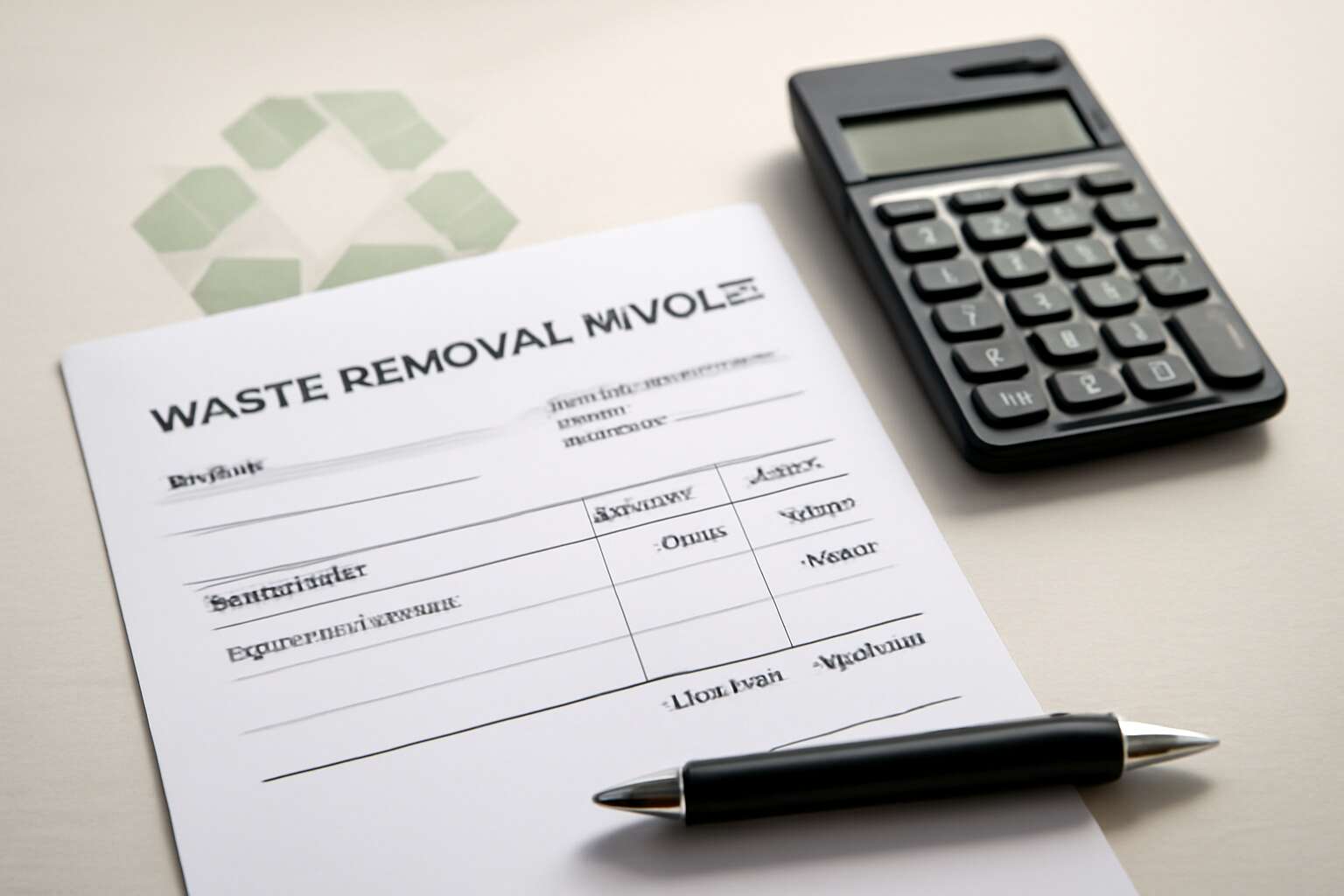
Understanding Waste Removal Billing and Invoices
What a waste removal invoice covers
Clear waste removal billing isn’t just a receipt—it’s a financial map for projects big and small. A well-structured waste removal invoice translates complex work into clear numbers so every stakeholder sees what happened, when, and why. On site, I’ve watched teams breathe easier when charges match the contract. In South Africa’s busy waste sector, clarity on costs can be a real competitive edge!
What does a waste removal invoice cover? Here are the essentials that make the document meaningful:
- Service date and site
- Description of services
- Unit price and quantity
- Disposal or tipping fees
- Taxes, VAT, and fees
- Travel charges and access fees
Key terms and line items on a waste management bill
Clarity isn’t a luxury—it’s the cheapest component of any waste project, a truism repeated by many on SA sites. In South Africa’s bustling sector, a well-read waste removal invoice acts like a compass: it reveals what happened, when, and why, with the precision of a tailored suit. “Clarity is currency,” a veteran on the floor insists, and the value is obvious on each line.
Understanding waste removal billing means reading the document as a story with clear parts: service date, description of work, unit price versus quantity, and extras for disposal, travel, or site access. Tax components should stand plainly, not hidden.
- Service date and site alignment
- Description of the work performed
- Taxes clearly itemised
When those numbers align with the contract and the timeline, teams breathe easier and the project keeps its swagger. In SA’s busy market, precision earns trust.
How charges are calculated in waste services
Understanding waste service charges begins with how the bill is built: the baseline service fee, the measurement of waste (weight or volume), and the fees charged to move and dispose of it. Prices are expressed as unit price times quantity, with careful allowances for extras such as disposal at a licensed site, fuel surcharges, and site access. Tax components appear plainly, often with VAT clearly itemised, so the reader follows the money in real time.
Follow the thread across the page: dates align with the contract, descriptions match the tasks performed, and every additional charge is traceable to a specific action. When the lines read clearly, teams pace forward—intentions intact, budgets intact—and trust grows. A well-formed waste removal invoice is music to a project’s ledger.
Common invoice formats used by waste removal providers
Invoices drive momentum on any site. A waste removal invoice should read like a clear contract: dates, tasks and prices lined up with the work performed. When billing is straightforward, approvals flow, and payments land on time.
Common formats show how charges stack up. You’ll find either itemized lines for each service or a consolidated total for bigger jobs. Digital delivery—PDF, CSV, or EDI—lets numbers feed directly into your accounting. VAT and site references stay consistent.
- Itemized-by-service lines
- Consolidated project totals
To read them well, dates must match the contract, and every extra fee should trace to a specific action. When the scope and line items align, budgets stay intact and audits stay calm.
Timeline for receiving and paying the bill
A lasting rhythm under every cleared site is timing. In South Africa, where projects weave through tight deadlines and lean cash flow, billing clarity becomes a kind of mercy. A clean waste removal invoice reads like a contract—dates, tasks, and prices aligned with the work performed.
Expect the timeline to unfold in clear stages: service completion, prompt invoice delivery, straightforward approvals, and a payment window that keeps the site humming. In my experience, payment terms often hover around net 30 days, with VAT where applicable and a traceable reference to the site.
- Service completion
- Invoice issuance
- Approval and payment
Creating and Issuing Invoices for Waste Removal
When to issue an invoice after service completion
‘Payment on time is the backbone of a clean community,’ a farmer once told me, and that truth travels with every waste removal job across South Africa. A well-crafted waste removal invoice can comfort both client and team, clearing the air after a job well done.
When service ends, I aim to issue the bill within 24 hours. The invoice should be clear and itemised, with a due date, payment methods, and a contact for questions. I’ve found that prompt, personal communication cuts down disputes!
To keep cash flowing, include these essentials:
- Clear site details and scope of work
- Exact quantities and rates for transparency
- Flexible payment options and the due date
Small towns rely on trust as much as ink on paper—the invoice helps both sides move forward with dignity.
Essential information on a waste management invoice
In the ledger of service delivery, a waste removal invoice is more than a bill—it’s a pledge that work is seen and paid promptly. A local farmer told me, ‘Payment on time is the backbone of a clean community,’ and that truth travels with every waste removal invoice across South Africa. These documents carry trust, turning a hard day’s labour into smooth, dignified exchange.
To keep billing lucid, a waste removal invoice should align with the actual work and the city or town’s rules. Consider these essentials:
- Service location and date
- Quantities and unit prices
- Total with taxes
These choices stamp a reputation for reliability. In South Africa’s communities, the waste removal invoice becomes a quiet ally, binding teams with fairness and forward momentum.
Best practices for itemized line items and descriptions
In South Africa’s lean waste-management landscape, a well-crafted invoice does more than request payment; it carries a pledge. A local farmer’s quip—’Payment on time is the backbone of a clean community’—echoes through every ledger, turning daily toil into a shared rhythm of trust and momentum.
Creating itemized line items and descriptions is the backbone of clarity. Treat each line as a small story—describing work, quantities, unit prices, and the resulting total without a fog of jargon. The target is a waste removal invoice, where every element stands up to scrutiny.
- Clear, descriptive line titles reflecting the specific work
- Accurate quantities and units (tonnes, m3, hours)
- Transparent unit prices and line totals
- Distinct tax calculations and the final total
Keep the format aligned with municipal rules and VAT; readability matters as much as accuracy. A well-structured bill strengthens communities by turning diligent labour into timely remuneration.
Digital vs paper invoicing in waste services
Across South Africa’s rural townships, invoices travel farther than the longest cattle track, and speed shapes trust. Digital invoicing can cut processing times by up to 50%, turning late payments into a smooth drumbeat for the wheelbarrow and the tractor. A well-crafted waste removal invoice communicates reliability as plainly as the sunrise over the veld.
- Digital invoicing delivers near-instant delivery and automatic reminders, reducing delays in collections.
- Paper invoicing stays useful where connectivity is patchy or for archival, but carries higher processing time.
Whichever path you choose, the aim remains clear: readability, consistency, and a steady cadence of remuneration that keeps communities moving together.
Mistakes to avoid on waste removal invoices
Across South Africa’s rural townships, nearly half of waste removal invoice documents arrive late, turning cash flow into a stubborn drumbeat. A well-crafted invoice reads like a sunrise over the veld—clear, steady, and ready to move mountains of debris and money alike.
I’ve watched invoices drift when details blur and numbers wander. Here are common mistakes to avoid:
- Missing or incorrect client information (name, address, or account number)
- Vague service descriptions or missing dates
- Wrong rates, quantities, or misapplied taxes
- Omitting payment terms or dispute clauses
- No invoice numbering or inconsistent line order
Keep the layout readable and the fields consistent, and a trustworthy current will carry the job from site to settlement. The aim remains readability, consistency, and a steady cadence of remuneration that keeps communities moving.
Compliance and Best Practices for Waste Removal Billing
Tax considerations and regulatory requirements
South Africa’s tax and regulatory landscape rewards clarity! A well-crafted waste removal invoice acts as a trustworthy record that reduces friction with SARS and keeps cash flow smooth.
- VAT details: vendor name, VAT number, date, description, total.
- Regulatory alignment with NEM: WA and licensing.
- Record-keeping for SARS and auditors.
Tax considerations and regulatory requirements in waste removal billing emphasize accurate VAT treatment, SA invoice rules, and disclosures where applicable.
A compliant invoice speeds payment and reinforces professional credibility across South Africa’s waste services.
Data accuracy and audit trails for invoices
A clean waste removal invoice is more than a bill—it’s a trust signal. In SA, data accuracy and audit trails are tax and regulator magnets: timestamped edits, immutable logs, and strict access controls reduce disputes and speed approvals. A well-kept waste removal invoice makes SARS and auditors smile, and we know the cash flow purrs.
Here are quick guardrails:
- Line items linked to the service ticket and the waste type.
- A unique, sequential invoice number and timestamped version history.
- Audit trails stored securely with controlled access for finance and compliance teams.
Consistency here keeps invoices compliant and credible, even when regulators look twice.
Privacy and client data handling on invoices
Privacy is not an afterthought; it’s the passport to smooth approvals on every waste removal invoice. “Privacy is the passport to speedier approvals,” says our head of compliance. In South Africa, POPIA-compliant handling isn’t optional—it’s part of professional service. The way data appears on invoices signals trust to clients and regulators alike.
- Data minimisation: collect only what’s necessary on the invoice.
- Secure transmission: use TLS and encrypted storage.
- Access controls: limit viewing and editing to finance and compliance teams.
- Retention and disposal: clear timelines and secure destruction of obsolete data.
With these practices, privacy and compliance become a quiet strength behind every billing interaction, preserving trust and reducing friction.
Record-keeping duration and archiving
“Good record-keeping is the passport to smooth audits,” says the head of compliance. In the waste removal sector, the archive is a quiet ally—never flashy, always reliable. A well-kept waste removal invoice history speeds inquiries and protects reputations.
In South Africa, most regulatory and tax frameworks expect records to be retained for at least five years. Archiving should be secure, indexed, and easily retrievable; digital storage with encryption and clear destruction timelines keeps the data consistent and compliant.
Obsolete files deserve secure disposal; when retention ends, the archive closes its loop and makes room for the next cycle. This approach ensures the invoice trail remains trustworthy under audits and regulators alike.
Tips for Customers: Reading and Negotiating Waste Removal Invoices
How to read line items and verify charges
Few things stall a project like a cluttered waste removal invoice. A clean bill speeds approvals and protects margins. As a South African procurement director puts it, “Clear charges save weeks of back-and-forth.” A well-structured waste removal invoice tells the service story—dates, removal types, and totals align at a glance.
To read it right, observe these features:
- Dates and service types tie to the work order.
- Prices, quantities, and any surcharges are clearly itemised.
- Taxes, fees, and discounts appear with supporting references.
When the bill is easy to read, conversations stay constructive. It becomes clearer how charges reflect the service and the value delivered, making negotiations smoother for teams across South Africa.
How to dispute discrepancies in waste service bills
“Clear charges save weeks of back-and-forth,” a South African procurement director once observed, and it sticks when a project hinges on invoices. The waste removal invoice should read like a well-told story: dates and service types align with the work order, and totals vanish into clear lines!
Readers who spot discrepancies can approach the bill as a curator would examine artwork—looking for coherence, references, and consistency.
- Request supporting documents that tie charges to the work order
- Verify taxes, fees, and discounts against the contract terms
- Compare current charges with prior bills and seek explanations for any variances
With calm questions and precise language, negotiations around the waste removal invoice stay constructive, helping teams across South Africa protect margins and maintain trust!
Negotiating terms: payment schedules and late fees
In South Africa, a well-lit waste removal invoice can save weeks of back-and-forth. “Clear charges save weeks of back-and-forth,” a procurement director once observed, and that rings true when the waste removal invoice reads like a short, coherent story—dates and service types aligned with the work order, totals in plain lines.
Tips for Customers: Reading and Negotiating Waste Removal Invoices. Negotiating terms—especially payment schedules and late fees—protects margins and trust. Approach the bill with calm questions and precise language, and expect contract references rather than broad assertions.
- Confirm due dates match the contract’s payment schedule so cash flow remains predictable.
- Request cap on late fees and clear criteria for penalties to avoid surprises.
- Ask for credits or discounts for service gaps or errors, with explicit ties to the work order.
With measured inquiry, the waste removal invoice becomes a lucid record, safeguarding margins and keeping relationships intact.
Service guarantees affecting invoices
South Africa’s procurement teams know one truth: a crisp waste removal invoice can save weeks of back-and-forth. “Clear charges save weeks of back-and-forth,” a procurement director quipped—it’s true when the invoice reads like a compact story, with dates, service types, and totals aligned to the work order.
Here are quick checks to speed things up:
- Verify dates and service scopes mirror the work order.
- Ask for a cap on late fees and clear penalty criteria.
- Request credits for service gaps or mistakes, tied to the contract.
With measured inquiry, the bill becomes a lucid record, protecting margins and maintaining trust across South Africa’s vendor network.
Templates and tools for reviewing invoices quickly
In South Africa’s procurement corridors, a single misread line can stall a project for weeks. Reading a waste removal invoice becomes a quiet art—templates and tools help spot where numbers drift and the story stays clear.
- Templates standardize what to look for, making reviews less about memory and more about consistency.
- Tools that generate audit trails turn guesswork into evidence.
- A calm, collaborative tone when discussing discrepancies preserves partnerships.
When customers approach invoices with calm curiosity, margins stay healthy and vendor networks prosper. Templates and digital review systems keep the process humane and human.

0 Comments